Choosing the Right Motorboat Size: My Buying Guide
Reading time: 10 minutes
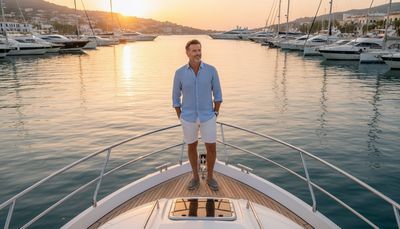
Three years ago I stood at exactly this point: after months of searching, I had two motor yachts on my shortlist, a 15-meter (49-foot) Riva and a 22-meter (72-foot) Sunseeker. Both gorgeous, both technically flawless. My mistake: I had fallen in love with the bigger one without working out the consequences. The berth at Marina Punat on Krk cost $4,600 a month for the 22-meter version instead of $2,600, the crew requirements tripled, and for spontaneous weekend trips it was simply too much effort. Choosing the right motorboat size is not a question of prestige but a hard-nosed calculation between intended use, budget and reality.
In this guide I'll show you how to determine the boat size that really fits your life, so you don't realize three years later that you bought too big or too small.
Why Motorboat Size Decides Between Success and Frustration
Determining boat size doesn't mean ticking the most impressive yacht in the catalog. I speak from experience: a yacht that's too big eats up budget, time and nerves. One that's too small sends you back to the search after two seasons. According to an analysis by the German Boat and Shipbuilders Association (DBSV), 31 percent of first-time buyers sell their motor yacht again within 36 months, mostly because they chose the wrong size.
The most common misconceptions: many people think more meters automatically means more comfort. That's only partly true. From 18 meters of vessel length, most EU marinas apply the commercial class, you absolutely need a professional crew, and many smaller bays in the Mediterranean stay closed to you. Conversely, a 10-meter yacht for regular four-day trips with six people ends in claustrophobia and annoyed guests.
I use a simple rule of thumb: for every person living aboard long-term I allow at least 3 meters of vessel length, and 1.5 meters for day guests. For me as an entrepreneur who also uses the yacht for networking and business contacts, that means 18 meters for a maximum of six overnight guests plus two crew members, or 14 meters for day trips with up to eight people.
Which Boat Size for Which Use: My Rules of Thumb
The intended use defines motor yacht dimensions more precisely than any technical specification. I distinguish four core scenarios that I've played through myself.
Day Trips and Weekend Getaways in Your Local Waters
For trips from Vienna to Bratislava on the Danube or short Mediterranean hops from Split to Hvar, 10 to 14 meters are entirely sufficient. My first motor yacht, a 12-meter Cranchi, was perfect for such outings: room for six people, two cabins for spontaneous overnight stays, low operating costs. In 2023 Marina Kornati in Biograd charged $2,000 per season (May to October) for this boat class, while the 18-meter successor cost $3,500 there.
Important: at this size you can often still handle the boat yourself, with no crew costs. The German Sportbootführerschein See (sport boat license for sea) is enough in most EU waters up to 15 meters in length and 20 meters overall length.
Multi-Day Trips with Family or Business Partners
As soon as you regularly spend four to seven days in a row on the water, 15 to 20 meters is the lower limit for real comfort. For such occasions I often charter an 18-meter Azimut: three double cabins, a crew cabin, a flybridge with a full second helm station. The decisive difference from smaller models: enough storage space for luggage, a functioning salon for meetings or dinners, separate wet areas.
How many meters of motorboat for a family? My rule of thumb: at least as many cabins as couples, plus one spare. For two couples with children that means three cabins, which realistically means 16 to 18 meters. Most shipyards such as Sunseeker, Princess or Ferretti offer optimal layouts in this segment.
Long-Term Charter and Self-Chartering
If you want to run your yacht profitably, you have to choose the motorboat size for Mediterranean charter strategically. According to statistics from the charter portal Booking Manager, yachts between 18 and 24 meters achieve the highest utilization rates in the Mediterranean: in 2024 these averaged 22 weeks per season, while smaller boats (under 15 meters) reached only 14 weeks.
The reason: charter customers specifically look for yachts that are comfortable for six to eight people without slipping into the superyacht category (from 24 meters) with its exorbitant costs. My own chartering experience in Croatia shows that a 20-meter motor yacht earns between $8,800 and $16,500 per week, depending on season and equipment. I've already covered in a separate article how you can charter out your own yacht.
Representation and Business Use
As an entrepreneur I also use my yacht as a floating business card. What counts here isn't just the vessel length but the overall package: design, shipyard, equipment. For serious business events I recommend at least 18 meters; below that it quickly looks like a private leisure boat rather than a professional tool. A 22-meter Sunseeker or Azimut conveys substance without seeming showy. Above 30 meters the superyacht range begins, which raises different expectations and also causes different running costs.
If you're interested in how a yacht can strengthen your image as an entrepreneur, my experience with targeted representation at sea is worth a look.
Optimal Yacht Length for Berth Costs and Infrastructure
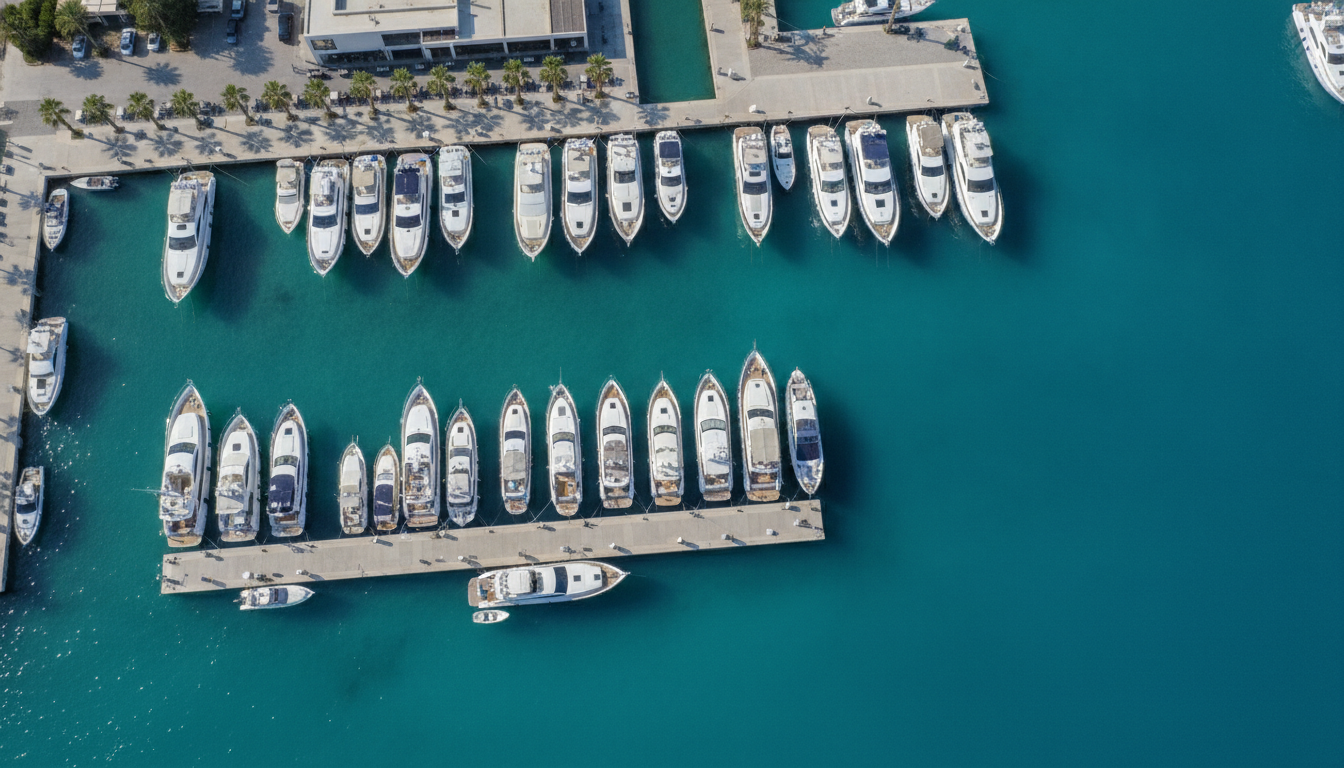
Running costs rise not linearly but exponentially with boat length. A concrete example from my home base: in 2025 ACI Marina Split charged around $20,000 for an annual berth (12 months) at 12 meters in length, already $35,000 at 18 meters, and $57,000 at 24 meters. That is more than a doubling for a 50 percent increase in length.
On top of that come ancillary costs: insurance, winter storage (if you don't have a year-round berth), maintenance. According to a survey by the Association of German Sport Boat Schools (VDS), the annual upkeep of a motor yacht is about 10 to 15 percent of the purchase price, so for a $550,000 yacht that is $55,000 to $82,500 per year. Larger yachts tend toward the upper end of that range.
My tip: check availability and infrastructure at your destination marinas in advance. Many exclusive berths in Cannes, Monaco or Porto Cervo have waiting lists for boats over 20 meters, while 15-meter berths are often available at short notice. If you plan to anchor in Croatia regularly, my article on berths in Croatia offers concrete strategies for securing one long-term.
Boat Class Comparison: Numbers You Need to Know
Dividing boats into classes helps with orientation, even if the boundaries are fluid. I distinguish by EU design categories and practical use:
- Class A (under 12 meters): Sport boats for coastal waters, mostly self-operated, low berth costs, limited living comfort for longer stays. Typical models: Cranchi Endurance 33, Jeanneau Leader 36.
- Class B (12 to 18 meters): Small motor yachts for coastal and inland waters, two to three cabins, often still without a crew requirement. Examples: Princess V50, Azimut 55, Sunseeker Portofino 40.
- Class C (18 to 24 meters): Mid-size motor yachts, often with a professional crew, ideal for charter and multi-day trips. Models: Ferretti 720, Sunseeker 68, Princess Y72.
- Class D (from 24 meters): Superyachts, crew mandatory, significantly higher operating and berth costs, often flag registration outside the EU (Malta, Cayman Islands). Examples: Benetti, Lürssen, Custom Line 100+.
Every class has its place. I started with a 12-meter yacht, switched to 18 meters after three years, and am currently testing a 24-meter charter for possible expansion. My takeaway: the sweet spot for private owners with occasional chartering is 18 to 22 meters, big enough for comfort and representation, small enough for manageable costs and flexibility.
My Step-by-Step Method for Determining Size
If I were starting over today, I would proceed like this: first I define the primary use. Am I mostly traveling alone or with a partner? Will I use the yacht for events? How often per year? Second, I calculate realistically: how many nights will I actually spend aboard? For me it was 40 planned nights in the first year; in reality it was 18. That completely changed my perspective.
Third, I do a test run, not just a polite lap around the harbor but a real multi-day trip. For my current yacht I chartered three days with family and business partners before I signed. What looks perfect in the brochure can turn out cramped, loud or impractical in practice. In my article on the test drive of a luxury yacht, I describe exactly what I look out for.
Fourth, I calculate the total costs over five years: purchase price, berth, insurance, maintenance, crew, fuel. For an 18-meter yacht with a purchase price of $660,000, you can realistically expect $440,000 to $550,000 in follow-on costs over five years. Your budget has to cover that, otherwise the yacht becomes a burden instead of a joy.
Common Mistakes When Choosing Motorboat Size
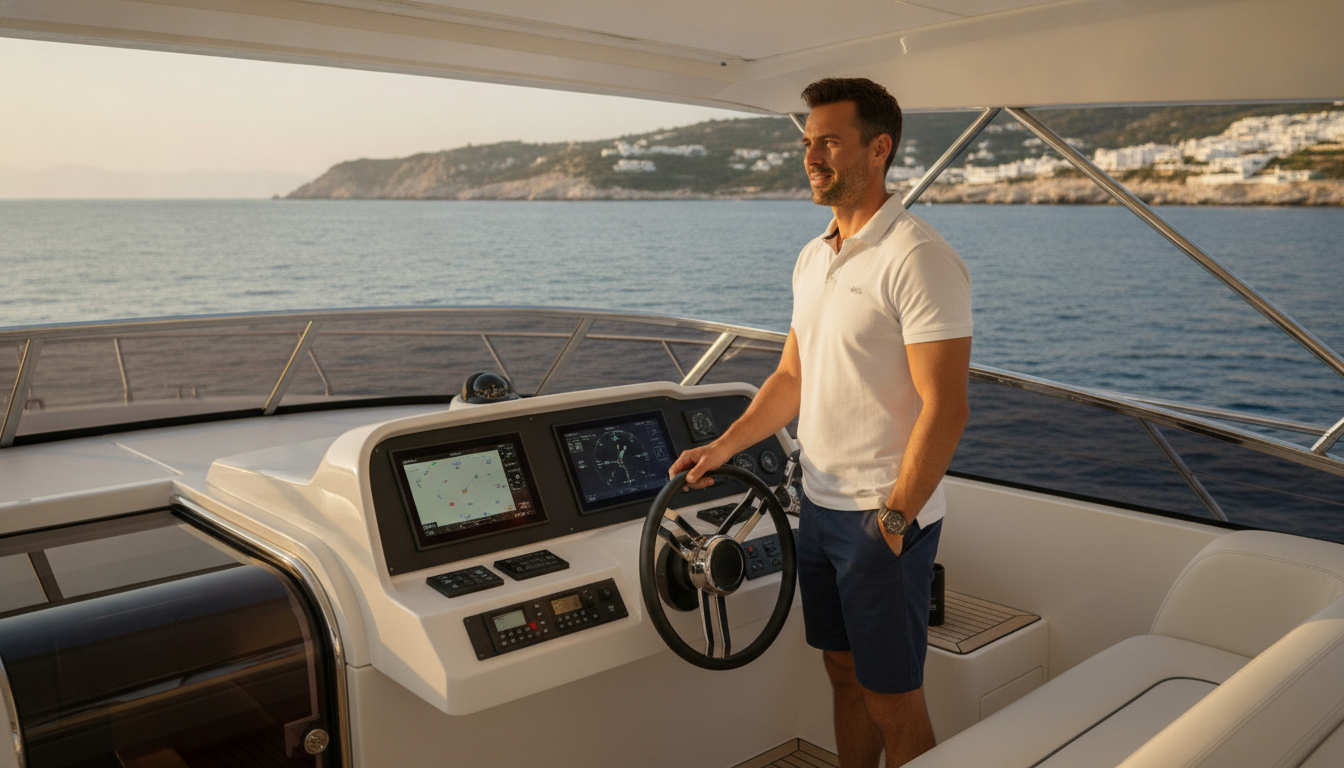
The biggest mistake is emotional buying. I know entrepreneurs who bought a 28-meter yacht because their business partner had a 24-meter one. After two years the boat sat in the harbor more than at sea, costs exploded, and the sale came with a 30 percent loss in value. If the topic interests you, my article on depreciation of motorboats offers concrete strategies for protecting your capital.
Another classic: underestimating crew costs. From 18 meters you realistically need at least a captain, often a deckhand or steward as well. That quickly adds up to $88,000 to $132,000 in personnel costs per year. Many buyers don't plan for this and then face the choice: sell the yacht or raise the budget.
Cruising-area planning is often neglected too. A 22-meter yacht is perfect for the Côte d'Azur, but in the Croatian islands with their narrow bays it is sometimes a millstone around your neck. Conversely, a 12-meter yacht looks rather modest on a Monaco charter. I always choose boat size with my primary cruising area in mind.
FAQ: The Most Important Questions About Motorboat Size
Which boat size is optimal for a family of four in the Mediterranean?
For a family of four I recommend 14 to 18 meters. That offers two to three cabins, enough salon space and enough deck area for kids. Models like the Princess V55 or Azimut 60 are ideal: they combine family suitability with solid offshore capability and can still be handled yourself or run with a minimal crew if needed.
At what boat length do I absolutely need a professional crew?
Legally there is no EU-wide limit, but in practice it becomes very demanding to maneuver a motor yacht safely alone or as a pair from 18 meters. Insurers often require proof of a professional skipper from 20 meters. In my experience a crew makes sense from 18 meters and is indispensable from 24 meters, if only because of docking and anchoring maneuvers in crowded marinas.
How do I calculate running costs by motorboat size?
The rule of thumb is 10 to 15 percent of the purchase price per year. For a $550,000 yacht that's $55,000 to $82,500. Of this, roughly 35 to 40 percent goes to the berth, 20 to 25 percent to maintenance and repairs, 15 to 20 percent to insurance, 10 percent to fuel, and the rest to small items such as harbor fees or winter storage. Crew costs come on top separately and can double the total.
Is a bigger yacht worth it for chartering?
Yes, but only from around 18 meters up. According to data from the European charter association (ECPY), yachts between 18 and 24 meters achieve the highest returns: on average 6 to 9 percent of the purchase price per year after all costs. Smaller boats are harder to market, and larger ones have operating costs too high for most charter customers. You'll find more details on chartering in my article on self-chartering.
Which motorboat size suits spontaneous weekend trips?
For spontaneous short trips, 10 to 14 meters is ideal. You don't need a crew, the organization is minimal, and operating costs stay manageable. For a long time I had a 12-meter Cranchi for exactly this purpose: set off Friday afternoon, anchor in a bay on Saturday, head back Sunday. Uncomplicated, affordable, maximum flexibility.
Conclusion: The Right Motorboat Size Is the One You Actually Use
After eight years of yacht ownership and countless conversations with other owners, I've reached one conclusion: the best boat size is not the biggest one you can afford but the one you use regularly and with pleasure. My 18-meter Azimut is the sweet spot for me: big enough for multi-day trips with business partners, small enough for spontaneous weekends for two, economical through occasional charter, impressive without being showy.
Before you sign, take time for an honest assessment: how often will you actually be aboard? With how many people? In which waters? What budget can you sustain long-term? A test trip over several days is a must, not an option. And if you're torn between two sizes, choose the smaller one when in doubt. It's easier to buy bigger in three years than to get rid of a yacht that's too big.
Determining motorboat size is not a science, but it isn't a gut feeling either. It is a mix of sober calculation, realistic self-assessment and the knowledge that the perfect yacht is the one that fits your life, not your ego. With that in mind: good luck with your search, and if you have questions, feel free to write to me. I share my experiences out of conviction, not self-interest.