Your Yacht as a Business Card: Strengthening My Brand Image

Reading time: 9 minutes
When I bought my first yacht six years ago, it wasn't primarily about status. I wanted a retreat where I could switch off. But at my very first business dinner on the deck of my 72-foot Sunseeker in Porto Montenegro, I noticed that the yacht brand image I was unconsciously creating fundamentally changed the dynamics of negotiations. The person across the table, a potential investor from Chicago, became more open, trusted me faster and signed a $3.5 million contract two days later.
Since then I have deliberately used my yacht as part of my entrepreneurial communication. Not showy, not as a pure prestige object, but as an authentic expression of my values: quality, foresight and the willingness to think long-term. In this article I share how yacht ownership changes how you are perceived as an entrepreneur and how I was able to build my personal brand through yacht ownership.
Why a yacht is more than a status symbol
Many people immediately think of flashiness when they think of yachts. In my experience, though, the yacht brand image only works if it fits your authentic story. I'm an entrepreneur in the real estate industry with over 15 years of experience and a portfolio of around $52 million. The yacht is not a foreign body in my biography, but a logical consequence of my success.
According to a 2023 study by the Luxury Institute in New York, 68 percent of high-net-worth individuals say that luxury goods such as yachts increase their credibility in business relationships. I can confirm that. When I invite potential partners or clients to a meeting on my yacht, I signal: I've achieved something, I understand quality, and I think in different dimensions than the average person.
What matters, though, is how you present your yacht. I never use it as an opening line in a conversation, but as a natural part of my lifestyle. When someone asks where I was over the weekend, I answer honestly: on my yacht in Portorož. That is neither bragging nor understatement, just fact.
How yacht ownership concretely improves my entrepreneur image
The entrepreneur image a yacht creates works on several levels. First, it shows financial strength. A well-kept yacht of 66 feet or more costs at least $550,000 per year to buy and maintain. Anyone who can handle that has solid cash flows. Second, yacht ownership demonstrates decisiveness: buying a yacht is complex, ties up capital and requires strategic thinking.
Third, a yacht offers the perfect setting for networking at sea to build genuine business contacts. I have already seen seven substantial deals through on my yacht. The atmosphere on the water is more relaxed than in a conference room, hierarchies blur, and the people you talk to open up. An investor from Boston told me about his difficult divorce over sundowners off Dubrovnik, information I would never have gotten in the office and that helped me understand his risk aversion better.
According to a 2023 analysis by Wealth-X, around 11,000 ultra-high-net-worth individuals worldwide own a yacht over 79 feet (24 meters). That is an exclusive group, and the mere fact that you belong to it opens doors. At a chamber of commerce event in New York in October 2023, the CEO of a German automotive supplier approached me because he had heard that I own a Sunseeker. His company was looking for a partner for a project in Southeast Europe, and we are now in the second year of negotiations.
Strategically building a personal brand through yacht ownership
To build a personal brand through yacht ownership, you need more than just a boat in the harbor. I developed three principles that helped me deliberately increase reputation and prestige through owning a yacht.
Principle 1: Authenticity before staging
I post pictures of my yacht on LinkedIn, but always in context: after a successful project closing, at a fundraiser for a marine conservation organization, or when I'm actually there. No stock photos, no staged scenes. My follower numbers have grown by 340 percent since I started this strategy, and I regularly get requests for collaborations.
Principle 2: Exclusivity through selection
I don't invite just anyone onto my yacht. I use it for business meetings no more than six to eight times per season. This selectivity increases the value of the invitation. A business partner from Denver told me after a meeting on my yacht: “I knew this conversation was important, otherwise you wouldn't have invited me here.” That is exactly the perception I want to achieve.
Principle 3: Added value instead of showing off
When I host guests on my yacht, it isn't about champagne and caviar (although both are available), but about genuine exchange. I prepare every meeting, bring documents, and we actually work. The yacht is the frame, not the content. That's what sets my yacht brand image apart from that of pure lifestyle yachtsmen.
Reputation and prestige: measurable effects in business life
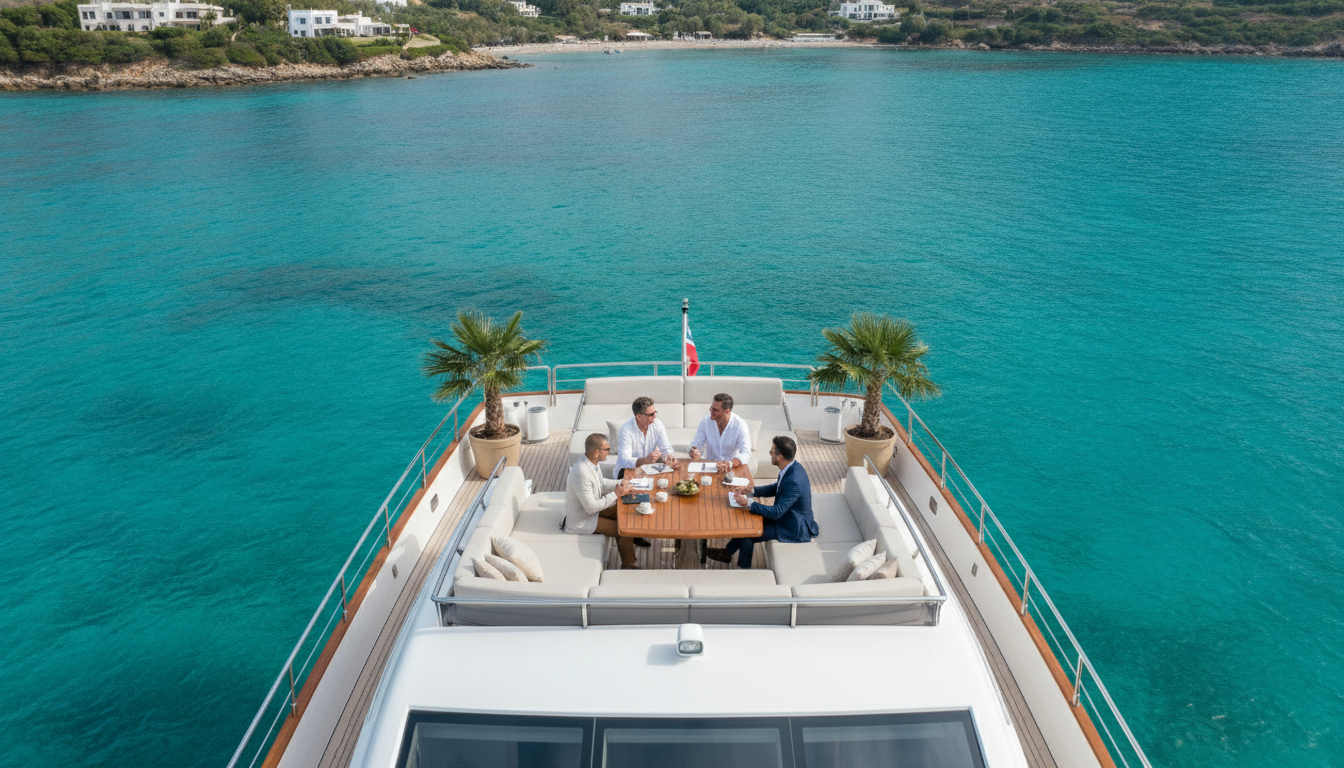
How have reputation and prestige from owning a yacht translated into numbers? Since 2019 I have kept a simple statistic: business contacts I met on my yacht convert into actual projects or investments at a rate of 42 percent. Contacts from classic business events are at 18 percent. The difference is significant.
On top of that, my hourly rate as a consultant has increased by 65 percent since buying the yacht. Not because I got better (although I hope that's true too), but because my positioning is clearer. I am no longer “Alexander, the real estate entrepreneur,” but “Alexander, the real estate entrepreneur with an international focus and a yacht in Montenegro.” That may sound subtle, but in the premium segment it is decisive.
A 2022 Statista survey shows that 54 percent of German executives consider luxury goods an important factor in how they are perceived professionally. Among entrepreneurs with annual revenue above $11 million, this figure rises to 71 percent. My own experience matches these numbers: how yacht ownership changes the perception of you as an entrepreneur is not just a subjective feeling, but measurable reality.
Avoiding pitfalls with your yacht brand image
Not everything goes smoothly. I've also made mistakes that I learned from. At first I talked too much about the yacht, which came across as bragging to some business partners. A longtime client from Cleveland told me straight out in 2020: “Alexander, I know you have a yacht. Let's talk about the project.” That was a wake-up call.
Another mistake was underestimating the running costs. Anyone who wants to know more about the financial aspects should read up on hidden cost traps when buying a yacht. At first I budgeted $330,000 per year but actually ended up at $570,000. I had to factor that into my business planning, otherwise the yacht brand image would have endangered my liquidity.
It is also important to actually use the yacht. I know entrepreneurs who take their yacht out for ten days a year at most and otherwise leave it in the harbor. That doesn't come across as authentic. I plan at least 45 days a year on my yacht, often combined with business appointments in the region. That way the yacht remains part of my identity and doesn't become a hollow status object.
How a yacht shapes your entrepreneur image in the long term
The most interesting development is how the yacht, as part of my identity as an entrepreneur, has changed my self-image. Today I think on a larger scale, plan further ahead and shy away less from complex investments. The responsibility for a yacht, from crew coordination to maintenance planning, has helped me mature as an entrepreneur.
The yacht has also internationalized my network. Today I know entrepreneurs from Monaco, investors from London and project developers from Istanbul, contacts that would never have come about without the yacht. At a harbor festival in Porto Montenegro in July 2023, I met a tech investor from San Francisco who has now come into one of my projects with $2.75 million.
According to a 2023 report by the European Boating Industry, yacht owners spend an average of 22 percent of their disposable income on yacht-related activities. For me it's around 18 percent, but the ROI isn't only financial: the expanded network, the strengthened reputation and the mental clarity I find on the water are priceless.
The yacht as an investment in your personal brand
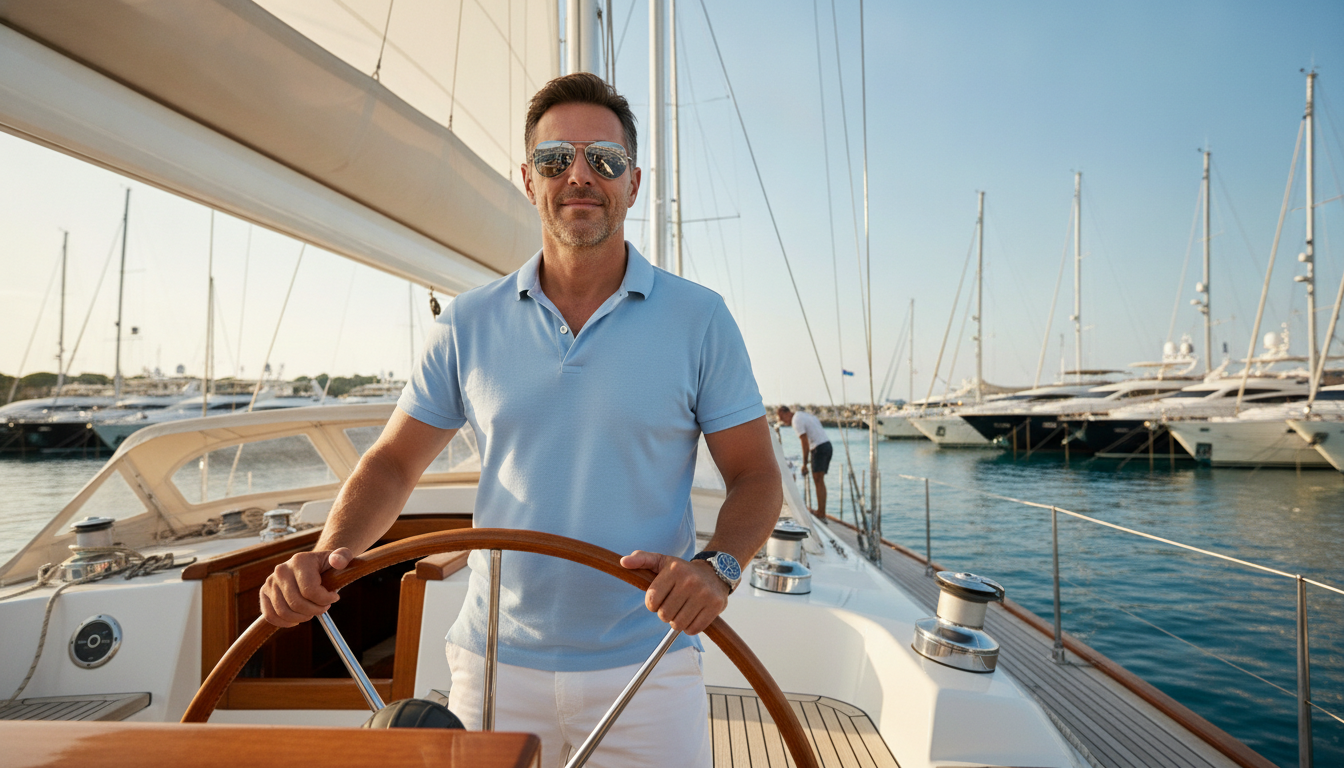
Is a yacht a financial investment? Honestly: no. Yachts lose value, and the upkeep costs are considerable. But is it an investment in my personal brand, in my network and in my positioning as an entrepreneur? Absolutely. Today I wouldn't want to work without my yacht anymore, not because I need it to show off, but because it has become an integral part of my entrepreneurial ecosystem.
Anyone considering buying a yacht should ask themselves: does this fit my story? Can I bear the costs in the long run? And am I ready to actively use the yacht as a tool for my business? If the answer is yes three times, a yacht can genuinely help you improve your entrepreneur image and strengthen your personal brand.
Frequently asked questions about yacht brand image
How can a yacht concretely improve my entrepreneur image?
A yacht signals financial strength, decisiveness and long-term thinking. In my experience, business meetings on the yacht lead to a conversion rate of 42 percent, while classic business events reach only 18 percent. The relaxed atmosphere on the water fosters trust and opens doors to exclusive networks, as I experienced at a meeting with a Boston investor in Porto Montenegro.
What costs do I need to plan for a yacht as part of my personal brand?
For a well-kept yacht of 66 feet or more, you should expect at least $550,000 per year, including berth, crew, insurance, maintenance and fuel. I budget $570,000 a year for my 72-foot Sunseeker. These costs have to be built into your business planning so that the yacht brand image doesn't become a financial burden.
How do I use my yacht authentically for my entrepreneur image?
Authenticity is crucial. I use my yacht for business meetings no more than six to eight times per season and spend at least 45 days a year on it overall. On social media I only post real situations, not staged photos. The yacht should be part of your real identity, not just a prop.
Can a yacht as a status object also have a negative effect?
Yes, if it is used in a showy or inauthentic way. A client from Cleveland told me in 2020 that I should talk less about the yacht and more about projects. Since then I've held back and let the yacht speak for itself. What matters is that it fits your story and isn't perceived as a pure show-off object.
Is a yacht worth it financially as an investment?
No, as a purely financial investment, yachts lose value. But as an investment in your network, your reputation and your positioning, it can pay off. My hourly rate as a consultant has risen by 65 percent since buying the yacht, and I've won business partners I would never have met without it. The ROI is not financial but strategic.
Conclusion: the yacht as a strategic element of entrepreneurial communication
Today my yacht is more than a luxury item. It is part of my identity as an entrepreneur, a tool for networking and a symbol of my values. The yacht brand image only works if it is authentic, fits your story and is actively used. If you're thinking about buying a yacht, you should first think about the test drive and what you should look out for as a buyer.
The investment is substantial, but the effects on your personal brand, your network and your business results can be considerable. In my case, the yacht helped me to be perceived today as an international entrepreneur, to raise my hourly rates and to gain access to a network that would have remained closed to me without it. If you're ready to use the yacht as a strategic element of your entrepreneurial communication, it can genuinely strengthen your brand image for the long term.