Berth in Croatia: How to Secure Your Harbor Long-Term
Reading time: 13 minutes
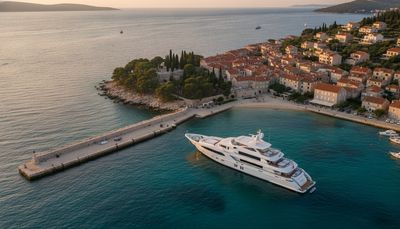
Last summer I stood in the Marina Frapa in Rogoznica and watched a 28-meter Sunseeker being turned away. No space, not even for one night. The owner had spent more than $86,000 on the yacht, but could not find a berth in Croatia along the entire Makarska Riviera. This situation is no longer an isolated case. The Croatian Adriatic coast, with its 1,244 islands, attracts more luxury yachts every year than there are berths available. If you don't plan in time and cultivate the right contacts, you are literally left in the water.
It took me three years myself to secure my permanent boat berth in Croatia at ACI Marina Split. In this article I show you how to speed up that process, which marinas are really suitable for superyachts and how to legally bypass waiting lists. Because I guarantee you one thing: with the right strategy you will get your harbor berth without waiting for years.
Why the berth market in Croatia is so tight
According to the Croatian tourism board, Croatia recorded an 18 percent increase in registered luxury yachts over 20 meters in length in 2023. At the same time, marina capacity grew by only 4 percent. The problem lies not only in the sheer number of boats but also in seasonality. Between June and September, everyone fights for the same premium spots in Split, Dubrovnik and Zadar. I have seen for myself how friends drove desperately from harbor to harbor in July and in the end had to moor 40 nautical miles north of their planned destination.
Demand for an exclusive berth in Croatia is also rising because international owners have discovered the Adriatic as a cheaper alternative to the French or Italian Riviera. An annual berth in Antibes quickly costs $130,000 and up, while in Split you can budget $49,000 to $70,000 for a 25-meter yacht. This price difference is drawing more and more boats from Western Europe into Croatian waters.
The best marinas in Croatia for luxury yachts at a glance
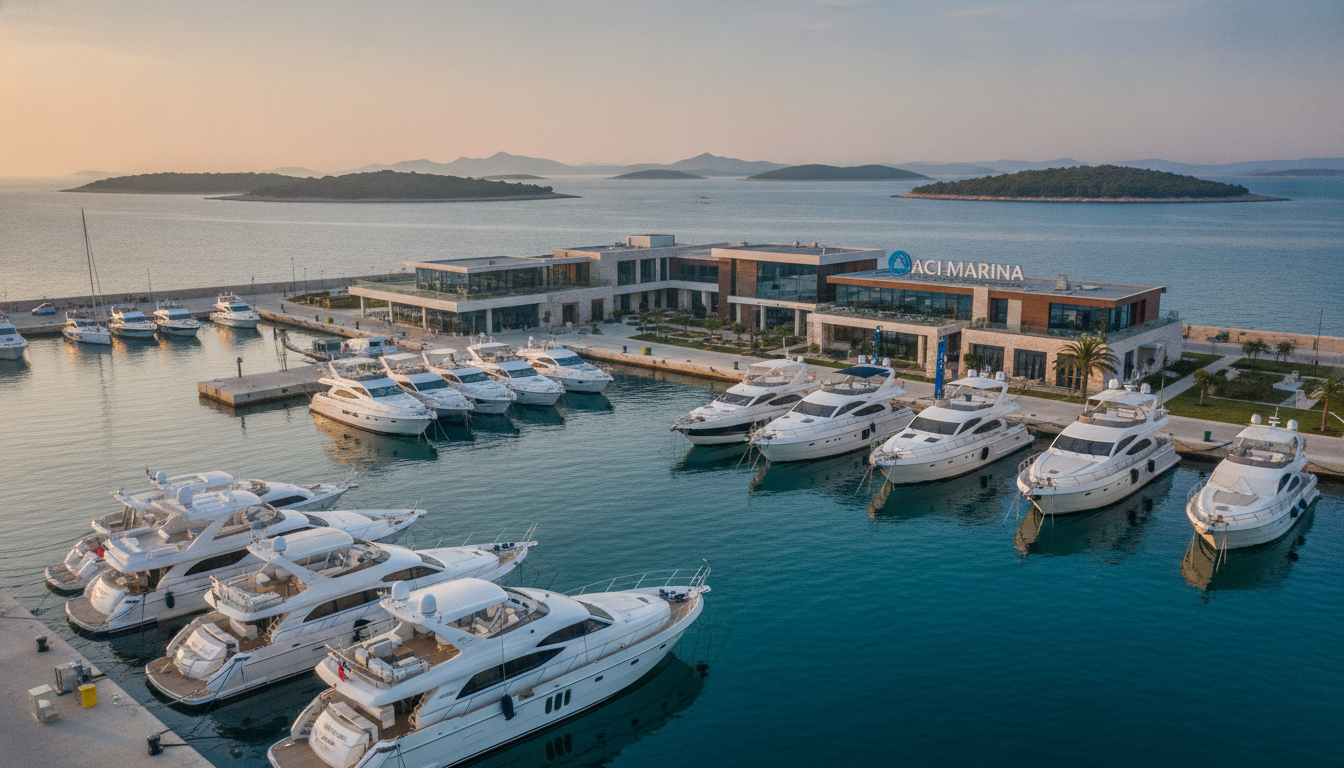
Not every marina in Croatia is suitable for larger yachts or offers the infrastructure you need long term. Over the last five years I have tested 14 different harbors and learned what really matters. ACI Marina Split is considered one of the most reliable for yachts up to 40 meters. It lies right at Diocletian's Palace, offers 364 berths and has a waiting list of 18 months on average. The advantage: you are central, have power up to 125 amps and 24-hour security.
In Dubrovnik I recommend ACI Marina Dubrovnik in Komolac, about 5 kilometers (about 3 miles) from the city center. It has 380 berths, 22 of which are reserved for yachts over 30 meters. The slipway can handle boats up to 50 tons, which is essential for maintenance work. The downside: the marina is located in a river estuary, which causes currents in heavy rain. For superyachts over 50 meters, Marina Frapa in Rogoznica is the first choice. It has only 8 berths in this category, but its own concierge service and a direct helipad.
An insider tip is Marina Hramina on Murter. It is smaller, with only 200 berths, but has much shorter waiting times. I know three owners who got an annual berth here within six months. The place is less glamorous but authentic and only 30 minutes from the Kornati Islands. For yacht owners who value peace and nature, this is a real alternative.
Renting a berth in Croatia long-term: costs and contract models
The costs of a boat berth in Croatia vary massively depending on length, location and season. For a 20-meter yacht in an ACI marina you pay between $38,000 and $59,000 a year. That sounds like a lot but includes electricity, water, security and often winter storage as well. In private marinas such as D-Marin Dalmacija in Bibinje, prices are about 15 percent higher, but you get additional services such as concierge, boat cleaning and preferred access to restaurants.
A common mistake is signing short-term seasonal contracts. These usually run from April to October and cost you about 60 percent of the annual price, but offer no guarantee for the following season. I advise you to take the annual contract with an automatic renewal option. Such contracts often include a price adjustment clause of at most 5 percent per year. That gives you planning security, and you keep your spot even when the marina is fully booked.
Pay attention to the clauses on duration of use in the contract. Some marinas require your boat to be on site for at least 6 months a year. Others allow flexible comings and goings. Since 2022 the ACI group has offered a flexible multi-marina model: you pay a 20 percent surcharge and can switch between all 22 ACI marinas. That is ideal if you want to cruise several regions of Croatia.
Bypassing the waiting list for a berth in Croatia: legal strategies
Most premium marinas keep waiting lists that officially last two to three years. I have found, however, that these lists are by no means set in stone. My most successful strategy was making personal contact with the harbor master in the off-season. In February I drove to Split, arranged a meeting and asked specifically about berths becoming available at short notice through cancellations. Three weeks later I had my contract.
Another option is berth exchange boards within the owner community. At Marina Frapa there is an internal bulletin board where owners offer berths they are temporarily not using. I found my first summer berth there by contacting an owner who was away in Greece from July to September. We concluded a private sublease, which the marina approved.
A third route is through brokers who specialize in berths. The company Yachting Croatia, based in Split, arranges preferred berths for a commission of 10 to 15 percent of the annual price. That sounds expensive, but it saves you months of waiting time. The broker knows the internal workings, knows which marina is currently releasing berths for larger yachts and can forward your application directly to the decision-maker.
Buying or leasing a boat berth in Croatia: what makes sense
Since 2020, some private marinas in Croatia have offered the option of buying berths. At Marina Mandalina in Šibenik, a 25-meter berth cost about $300,000 in 2023. The concept is similar to buying real estate: you acquire a long-term right of use for 99 years and also pay an annual service fee of about $8,600. The advantage lies in value stability. According to an analysis by Engel & Völkers Yachting, prices for purchased berths on the Croatian coast rose by an average of 22 percent between 2018 and 2023.
For me personally, buying did not pay off, because I value flexibility. If I sell my yacht or move to other cruising grounds, I'm stuck with an expensive asset that is hard to resell. A lease, on the other hand, can be canceled or adjusted annually. Buying also ties up considerable capital that I would rather put into the yacht itself or other investments.
It looks different if you plan to charter out your yacht long term. Then the purchase price pays for itself through the secured base. An owner I met in Split charters his 30-meter Azimut from May to September and generates about $195,000 in revenue per season. His purchased berth gives him the certainty that the boat is always optimally positioned and that he doesn't have to fear lease increases. If you want to look more deeply into value stability and capital protection, I recommend my article on depreciation of motorboats, which covers many parallel considerations.
Practical checklist for securing a berth
So that you don't make the same mistakes I did at the beginning, I have developed a concrete checklist. You should tick off these points before signing a contract:
- Check the maximum length and beam of your berth offer. Many marinas state only the length, but for a beam of more than 6 meters (about 20 feet) surcharges often apply.
- Clarify the power capacity: for yachts with air conditioning and extensive onboard electronics you need at least 63 amps, better 125 amps.
- Ask about the depth at low water. In river estuaries such as Dubrovnik-Komolac, the water level can fluctuate seasonally by 40 centimeters (about 16 inches).
- Secure in writing the right to visitor berths in sister harbors. This is important if you plan longer cruises and need safe ports of call along the way.
- Demand a clause for cost-free termination of the contract if you sell the yacht. Otherwise you pay until the end of the contract term, even if you sold the boat long ago.
The role of networks and personal contacts
Croatia is a country where personal relationships often count for more than formal waiting lists. I ultimately got my berth because I was a regular guest at the Nostromo restaurant in Split and met the harbor master there. Such coincidences can be planned if you move in the scene. Visit yacht shows such as the Croatia Boat Show in Split, held every year in April. There you meet marina operators, brokers and other owners in a relaxed atmosphere.
Another lever is membership in yacht clubs. The Yacht Club Split or the Yacht Club ACI give you not only prestige but also access to internal berth exchanges. The annual fee is about $1,300 to $2,700, which is negligible relative to the waiting time saved. Some clubs also offer preferred access to berths in their own marina.
If you also use your yacht for business purposes, such as networking at sea, building a solid network pays off twice. You benefit not only with the berth but also with maintenance work, insurance and charter options.
Seasonal particularities and winter storage
Many owners underestimate the importance of the winter months. From November to March most yachts sit on land, which causes additional costs. ACI marinas offer winter storage packages from $13,000 for a 20-meter yacht, including crane, supports and covering. Private yards such as the Betina shipyard on Murter are often cheaper but demand a 50 percent deposit by the end of August.
I have stored my yacht at Marina Mandalina in Šibenik for three years. The advantage there: the yard is right next to the marina, so I have no transport costs. Mandalina also offers a full-service package that includes engine maintenance, hull polishing and antifouling. That costs an additional $8,600, but spares me from organizing individual service providers.
If you want to leave your boat in the water over winter, make sure of adequate frost protection and regular checks. Not all marinas offer winter in-water berths, and when they do, often only for boats under 15 meters. I have heard of two cases where yachts suffered damage from frozen pipes because the owners were not on site. That is why I recommend either dry storage or a local boat service that checks on things weekly.
Legal and tax aspects of the berth
Since joining the EU in 2013, Croatia has simplified its rules for foreign boat owners, but pitfalls remain. If your yacht sails under the Croatian flag, you pay no additional berthing fee. If you sail under the Austrian or German flag, however, a surcharge of between 5 and 10 percent applies depending on the marina. That is why I registered my yacht in Malta, which is more favorable tax-wise and accepted in Croatian marinas.
Croatian VAT on marina services is 25 percent. If you use your yacht commercially or charter it out, you can reclaim this input tax under certain conditions. For that you need a Croatian VAT ID number (OIB) and a certificate of commercial use. My tax advisor in Vienna helped me prepare these documents, which brings me about $12,000 a year in refunds.
An important point is liability. Croatian marinas generally require liability insurance with a coverage amount of at least $2.2 million. Check whether your existing policy meets these requirements. I had to extend my insurance at Lloyd's with an Adriatic clause, which cost an additional $1,950 a year.
Common mistakes and how to avoid them
The biggest mistake I made myself was booking a berth by email only, without a personal viewing. The marina had sent me photos showing a modern pier. On site it turned out that my spot was at the very end, with heavy swell in a south wind. After two months I switched internally, but had to pay a $3,200 processing fee. Always view your berth in person and, if possible, test it for a few days.
A second mistake is ignoring notice periods. Many contracts have a notice period of six months before year-end. If you miss it, the contract automatically renews for another year. I know a German owner who wanted to get rid of his berth but had to keep paying for a year because he missed the deadline by two weeks.
Don't underestimate incidental costs either. Electricity is often billed separately, and for a 25-meter yacht with air conditioning, $430 to $650 per month adds up quickly. Water is usually included, but surcharges apply for excessive use (for example, hosing down after every cruise). Realistically budget 15 to 20 percent additional costs on top of the pure berth price.
FAQ: the most important questions about a berth in Croatia
How long do I have to wait for a berth in Croatia at a top marina?
At premium marinas such as ACI Split or Marina Frapa, the average waiting time is 18 to 36 months. Through personal contacts, flexibility in choosing the berth or use of broker services, you can reduce this time to 6 to 12 months. Smaller marinas or off-season bookings are often available immediately.
What does an annual berth for a 25-meter yacht in Croatia cost?
Costs range between $49,000 and $76,000 per year, depending on marina, location and facilities. On top of that come about 15 percent for electricity, winter storage and incidental costs. Private marinas are about 10 to 20 percent more expensive than ACI marinas but offer additional services such as concierge or preferred access.
Is buying a berth in Croatia worth it?
Buying is worth it if you want to keep your yacht in the same place long term and possibly charter it out. Appreciation averaged 22 percent between 2018 and 2023. For owners who value flexibility or might sell their yacht soon, leasing is the better choice.
Which marina in Croatia is best for superyachts over 40 meters?
Marina Frapa in Rogoznica and ACI Marina Dubrovnik are the only harbors with enough depth and infrastructure for superyachts up to 60 meters. Both offer 24-hour security, concierge service and direct access to suppliers. The waiting list is long, but you reach your goal faster through specialized brokers.
Can I sublet my berth in Croatia?
Most marinas do not allow direct subletting without permission. However, there are internal exchange boards or temporary use arrangements that you have to agree with the marina. Private sublease contracts are legally delicate and can lead to termination of your main contract. Always clarify this in advance in writing with the harbor master.
Conclusion: a perfect berth in Croatia through strategy
A berth in Croatia is no longer a given today, but with the right approach it is definitely attainable. The combination of a personal network, early planning and the willingness to consider smaller marinas gives you decisive advantages. It took me three years to get my dream berth myself, but today I would need only six months, because I know which levers to pull.
Don't start your search only once you have already completed your yacht purchase. Start contacting marinas during the buying phase, visit the coast in the off-season and build relationships. That way you make sure your yacht lies not only on the water but safely in the right harbor.
If you are still unsure whether the Croatian market is right for you, I recommend first booking a summer trial berth and getting to know the region. The Adriatic has so much more to offer than just beautiful bays. It is a way of life to be enjoyed long term, with the certainty of having a safe harbor at any time.