Hosting on My Luxury Yacht: Staging Events the Right Way
Reading time: 10 minutes
Last summer I stood on the aft deck of my yacht in front of 14 business partners and realized: the canapés were perfect and the champagne selection exquisite, but the guests were staring bored at the water. I had planned the event correctly on a technical level, but forgotten its emotional core. Luxury yacht events are more than a backdrop with finger food. They require staging, timing and a feel for when to hold back and when to lead. In this article I show you how I learned from that mistake and how I now organize events that guests still mention months later.
Proper preparation doesn't begin with the guest list but with the question: what should this evening trigger in my guests? A business dinner on the yacht has a different dynamic from a casual birthday party. Today I plan every event backwards from the desired feeling. Do I want to build trust, create closeness or simply impress? That clarity determines every further decision, from the route to the music.
Choosing the right route for the occasion
At my first larger event I sailed a classic round trip from Cannes along the coast. Sounds good, but it was a mistake: the guests knew the route, nobody looked anymore, the conversations fizzled out. Today I choose routes for the element of surprise. For a summer event in the Mediterranean, for instance, I head for the bay of Villefranche-sur-Mer, anchor off Cap Ferrat and let the guests swim at sunset. That creates a shared experience, not passive watching. The route has to suit the time of day: for morning business meetings I choose a short stretch with calm water, and evening events I plan so that we anchor at a visually strong spot at golden hour.
I avoid standard routes that every charter guest knows. Instead I research local insider tips, such as quiet bays near Porto Cervo in Sardinia or little-visited anchorages off Hvar. A networking event at sea thrives on this exclusivity. Nobody wants to see the same view for the third time.
Catering: less is often the better menu
I used to make the mistake of offering too much. Three courses, four sides, five desserts. The result: guests were overwhelmed, the crew stressed, the kitchen overheated. Today I rely on clear, pared-down menus with local products. For an event off Mallorca I work with suppliers from Palma who bring fresh fish and vegetables from the Mercat de l'Olivar in the morning. That makes the difference: guests can taste that this isn't some standard caterer reheating food, but that the ingredients were bought locally.
A proven format is the multi-course menu with small portions and long pauses between courses. That leaves room for conversation, and nobody feels rushed. I never serve everything at once, but stage every course as a small event: the sommelier explains the wine, the crew serves the plates from the right, I tell the story behind the dish. That turns eating into an experience. At a business event last fall I scheduled a 45-minute break between the main course and dessert, during which we offered whisky and cigars on deck. The most important contract details were discussed in that relaxed phase, not at the table.
Music and acoustics: the underestimated lever
On a yacht, acoustics are a challenge. Wind, engine noise, the lapping of the water: everything competes with conversation and music. At first I ran classic Spotify playlists and found that nobody could talk to each other anymore because the volume didn't suit the surroundings. Today I work with a professional DJ who adjusts the volume dynamically. In calm seas and light wind he plays more subtly, and in stronger wind he deliberately raises the bass so the music doesn't get lost but conversation remains possible.
For exclusive yacht events I go for live music when space allows. A saxophonist or a jazz singer creates an atmosphere no playlist can match. Important: the musician has to rehearse on board beforehand to test the acoustics. I once hired a guitarist who discovered on the day itself that his amplifier was too weak, an avoidable mistake. Today I plan such details 48 hours before the event in a technical check with the crew.
Timing: when you lead as host and when you let go
The biggest mistake I made as a host was to time the event like a business presentation. Guests felt the tension, and nobody relaxed. I learned that unforgettable events on a boat need structure, but also free space. Today I only plan the anchor points: welcome, meal, special moment (e.g. fireworks or sunset), farewell. In between I deliberately leave gaps in which guests can move freely, talk to one another or simply enjoy the view.
As the host on the luxury yacht, I have to sense when I need to be present and when to step back. At the welcome I am always personally at the gangway, greet each guest individually and briefly explain the most important points on board (restrooms, bar, safety). Then I step back, let the crew take over and only get actively involved again later. Guests don't want a constantly present host commenting on every moment. They want a framework in which they feel free.
Crew briefing: my team makes the difference
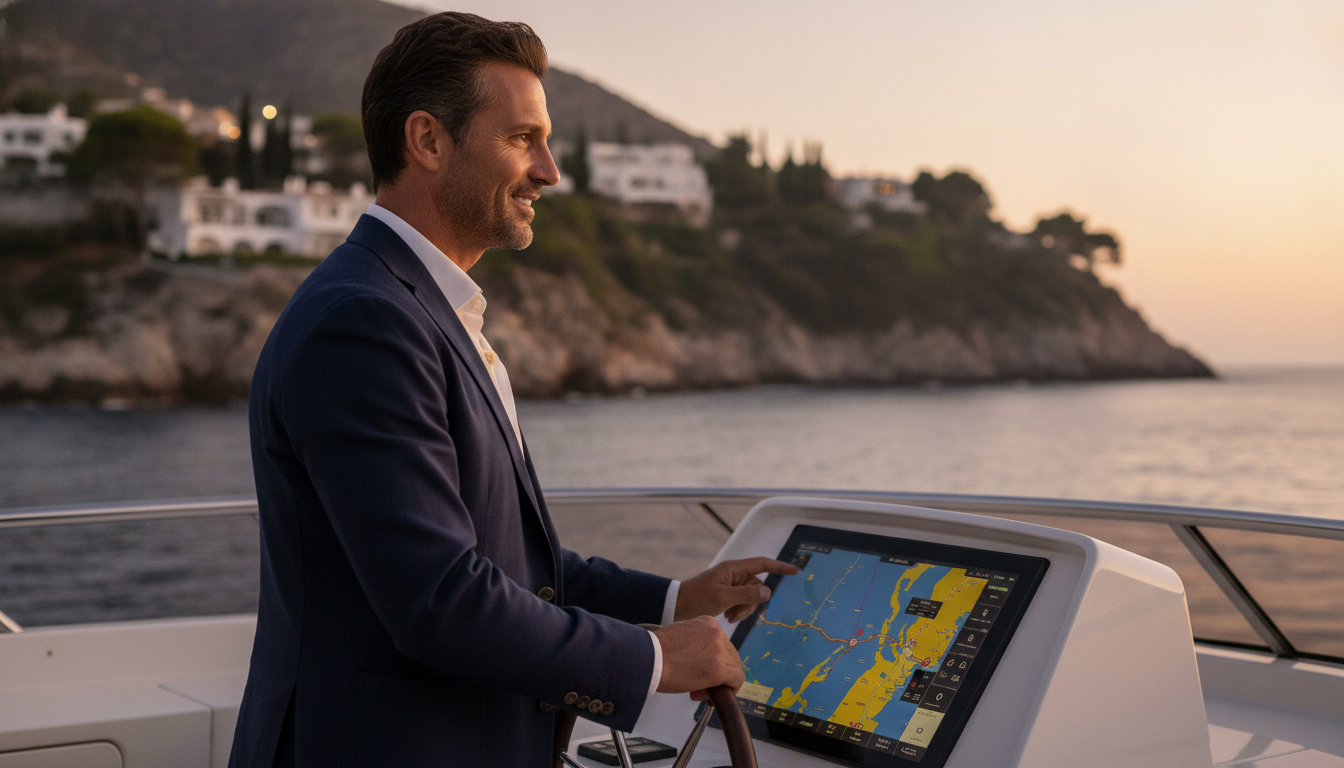
I used to underestimate how decisive the crew is for the success of an event. Today I hold a detailed briefing 24 hours before every event in which I go through not only the procedures but also describe the mood I want to create. I explain who the guests are, what expectations they have and which cultural particularities to observe. At an event with Arab business partners, I explained to the crew in advance that alcohol would only be offered on request and that certain foods must not be served. Details like these decide between success and embarrassment.
The crew has to know when to be active and when to remain invisible in the background. I give clear instructions: during the meal they are present, refill glasses, clear away discreetly. In pauses in conversation they withdraw. Good service is like a good screenplay: you don't notice it, but without it nothing works. I invest in regular training, especially in soft skills: how do I hand over a glass without disturbing? How do I react when a guest has an unusual request? These details make the difference between a good event and a perfect one.
Decoration and details: what stays in memory
I don't decorate every event the same way. A business event tolerates less frill than a private celebration. But a few well-thought-out details always set accents. For a summer event I once put small linen sachets with lavender from Provence at each place, a simple gift that guests took home and associated with the evening. Details like these cost little but stay in the memory.
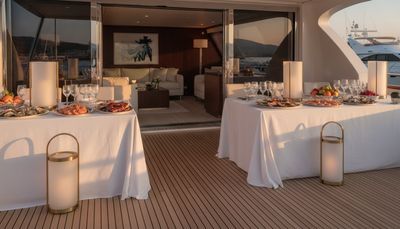
I avoid overloaded table decoration. Space on a yacht is limited, large flower arrangements look out of place and block the view of the water. I go for minimalist accents: high-quality tablecloths, fine tableware, subtle candles in wind-protected lanterns. The yacht itself is the decoration; everything else has to take a back seat. A common mistake is combining too many colors. I stick to two or three shades that suit the time of day and the occasion. For evening events I use warm tones (gold, cream, dark blue), for daytime events fresh, light colors (white, light blue, beige).
Contingency plan: what to do when something goes wrong
I have learned that something unforeseen can always happen on the water. Weather changes, technical problems, a guest who gets seasick: I have experienced all of it. Today I have a contingency plan for every event. If the weather turns, the crew knows which interior spaces we use, how we rearrange the tables and which alternative route we take. I always have seasickness medication on board, blankets for guests who are cold, and a plan B for the catering in case the kitchen fails.
A contingency plan also means communicating in good time. When I notice the weather turning, I inform the guests early, explain the alternatives and ask for their feedback. Nobody likes unpleasant surprises. Transparency builds trust, even when not everything goes perfectly. At an event last spring we had a technical problem with the air conditioning. I explained it to the guests immediately, set up fans and served ice-cold drinks. The guests found the situation more charming than annoying because they saw that we reacted professionally.
The most important elements for perfect luxury yacht events
- A route with an element of surprise and a visually strong anchor point at golden hour
- Pared-down catering with local products and long pauses between courses
- Dynamic music volume, adjusted to wind and conversation phases
- Structured timing with deliberate free space for spontaneous interaction
- A detailed crew briefing 24 hours before the event, including cultural details
- Minimalist decoration in at most three shades, with the yacht as the main backdrop
- A written contingency plan for weather, technology and health incidents
Calculating costs realistically
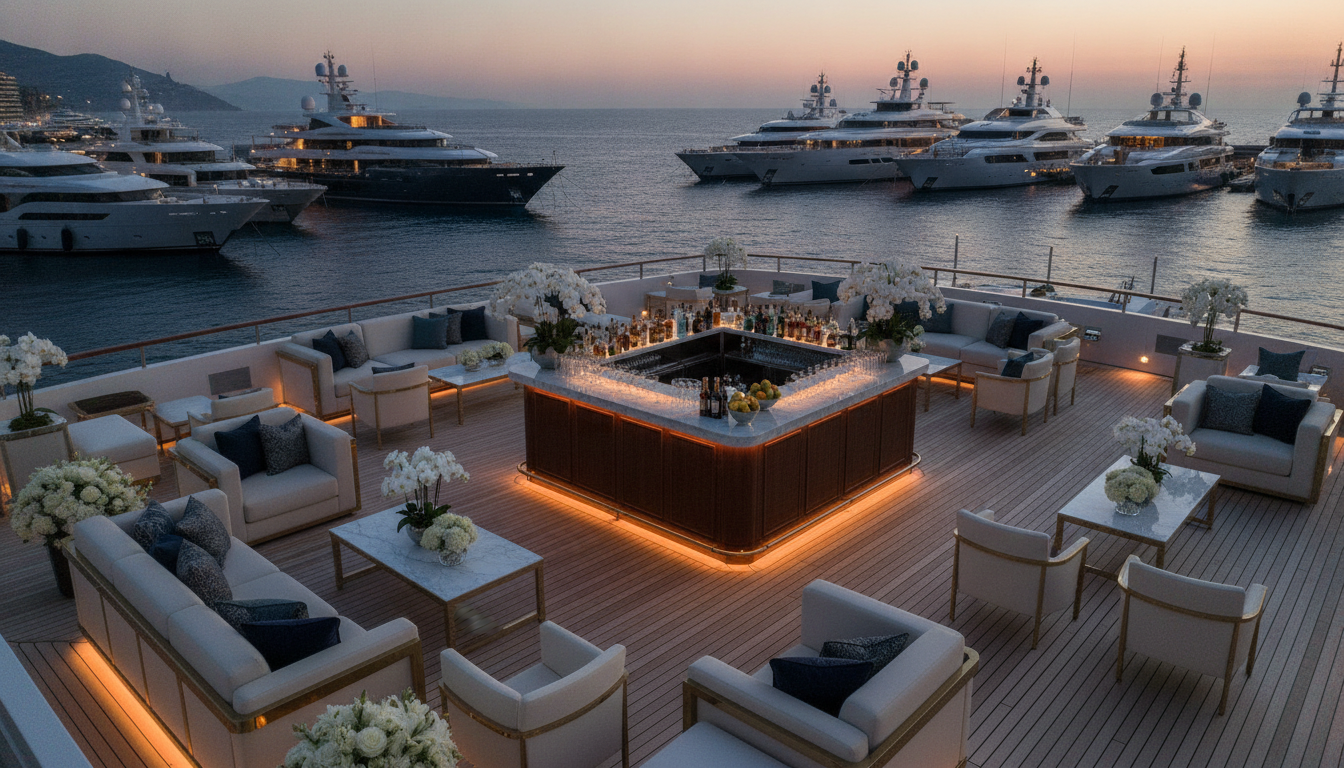
Yacht events are not cheap, but they are plannable. For a professionally staged event with 10 to 15 guests I budget about $5,400 to $8,600. That includes catering, drinks, crew supplements, music and decoration. Fuel is extra, depending on route and duration. For a four-hour trip along the Côte d'Azur I budget an additional $860 to $1,300 for fuel. Anyone who uses a yacht as a business card should see these costs as a marketing investment, not as pure luxury.
I keep a detailed cost breakdown for every event to create transparency and to learn from each one. What paid off, what was superfluous? One expensive mistake was an elaborate fireworks show that had to be canceled because of strong wind. The $3,200 was lost. Today I invest in experiences that are weather-independent: high-quality cuisine, excellent service, personal moments. That always pays off.
What really makes an event unforgettable?
After dozens of events I have understood: guests don't remember the most expensive dish or the most elaborate decoration. They remember moments when they felt special. The personal conversation with me at the bow as the sun went down. The moment we jumped into the water together. The story the captain told about the bay. Such moments can't be bought, but they can be staged, through genuine attention, well-thought-out timing and the courage to be vulnerable as a host.
Today I plan less perfectionistically and leave more room for spontaneity. The best yacht events are those where I am relaxed myself and my guests feel it. When I am stressed, it carries over. When I am authentic and present, an atmosphere emerges that no staging can replace. That is the most important lesson I have learned: technology and planning are the foundation, but emotions only arise when you are real as a host.
FAQ: frequently asked questions about luxury yacht events
How much lead time do I need for a professional yacht event?
At least four weeks for smaller events, eight to twelve weeks for larger events with more than 20 guests. That leaves time for the crew briefing, catering arrangements and contingency planning.
What is the ideal number of guests for an event on a 20-meter yacht?
A maximum of 12 guests for a dinner event, up to 18 for a cocktail reception. More guests mean less freedom of movement and poorer quality of conversation.
How do I handle seasick guests?
Always have seasickness medication on board, seat affected guests on deck facing the direction of travel and offer fresh air. In case of severe symptoms, head for the nearest bay and anchor.
Do I need a permit for events on my yacht?
For private events in international waters, usually not. In ports or near the coast, local regulations may apply, especially for noise or fireworks. Clarify beforehand with the marina or harbor authority.
How do I find the right crew for my event?
Through specialized yacht crew agencies or recommendations from other yacht owners. An initial conversation with an event briefing is important to align expectations and set service standards.
Conclusion: events on a luxury yacht are staging with heart
As a host on my luxury yacht I have learned that perfect planning is only half the battle. The other half is authenticity, attention and the courage to deviate from the plan once in a while. Today I rely on less perfection and more emotion, on well-thought-out details instead of overloaded staging. Every event is a chance to give people an experience they won't forget, not because it was expensive but because it was real. Anyone who wants to plan exclusive events on luxury yachts should begin with the question: what should this evening trigger in my guests? The answer determines everything else. If you want to know more about the costs and upkeep of a yacht, take a look at my article on superyacht operating costs.