Superyacht Operating Costs: My Annual Bill in Detail

Reading time: 11 minutes
Last week I sat down with my accountant and we went through what my 36-meter superyacht actually cost in 2023. The result: $673,000, which is exactly 11 percent of the purchase price. That number shocks many people who are thinking about buying a superyacht. Today I'm showing you my complete annual bill and explaining where the money actually goes and which items you must not underestimate when planning.
Superyacht operating costs are the biggest mystery for many prospects entering the world of luxury yachts. While the purchase price is transparent, the running costs often remain hidden. When I bought my first yacht in 2019, I had no realistic idea of the actual upkeep. That is the transparency I want to offer you today.
The 10 Percent Rule for Superyacht Upkeep Costs
In the industry, the rule of thumb is that the annual costs of a superyacht are about 10 percent of the purchase price. For my yacht with a purchase price of $6.05 million, that means a calculated $605,000 per year. This rule originally comes from a 2018 SuperYacht Times analysis and has proven astonishingly accurate in practice.
According to a 2023 study by the Verband Deutscher Reeder (the German Shipowners' Association), the median for yachts between 30 and 40 meters in length is indeed 10.8 percent of the purchase price. My calculation of 11.1 percent is therefore right at the average. It is important to understand that these costs are incurred whether or not you use the yacht.
Why Calculating Per Meter Is More Precise
These days I prefer the formula: length in meters multiplied by $16,500 to $22,000 per year. For my 36-meter yacht, that gives $594,000 to $792,000. With my actual $673,000, I land right in the middle. This method accounts for the fact that larger yachts require disproportionately more staff and maintenance.
Superyacht Crew Costs: The Biggest Item on My Bill
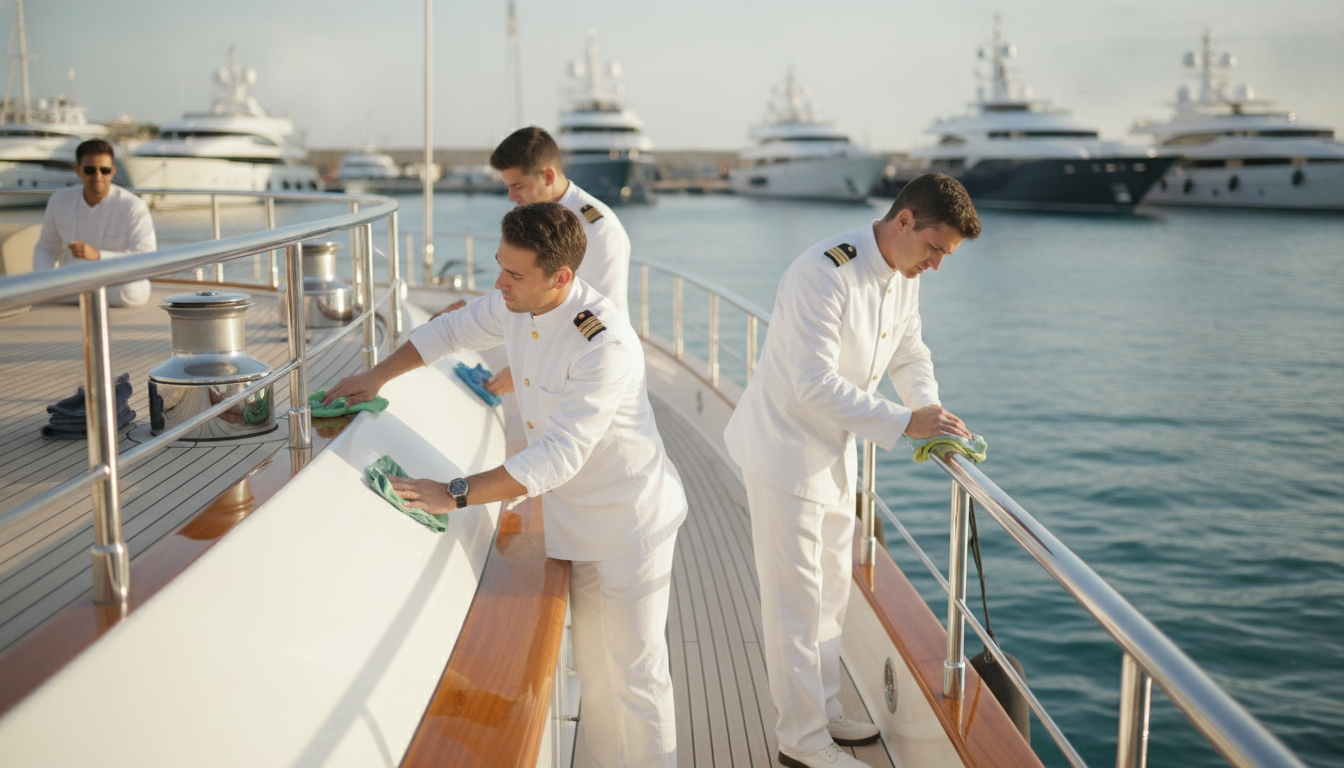
My crew consists of a captain, a first officer, two deckhands, a head chef and two stewardesses. That is seven full-time staff who cost me a total of $323,000 in 2023. That is 48 percent of my total operating costs and by far the largest single item.
My captain receives an annual salary of $86,000 plus $13,000 in allowances for special assignments in high season. The first officer gets $59,000, the deckhands $40,000 each. My head chef costs me $73,000, the two stewardesses $46,000 each. On top of that come payroll taxes and benefits of 18 percent, insurance and training.
According to the Global Superyacht Crew Salary Survey 2023 by Luxury Yacht Group, my salaries sit in the mid-range by European comparison. Top crews on 50-meter-plus yachts earn considerably more. One important insight: skimping on crew immediately backfires in service quality and, in the worst case, can endanger safety.
Superyacht Maintenance Costs and Technical Upkeep
The Lürssen yard in Bremen, where I had my yacht for its annual inspection in March 2023, billed me $96,000 for a 14-day yard stay. That covered the complete technical inspection of the two MTU engines, underwater hull cleaning, a fresh antifouling coat, a check of all electrical systems and minor repairs to the teak deck.
In addition, 2023 brought unplanned repairs of $37,000. In July I had to have the air conditioning completely replaced in Antibes after the system failed during a heat wave. In September I replaced all the batteries in the electrical system, an investment of $20,000.
Spare Parts and Ongoing Maintenance
My budget for spare parts and consumables is $2,750 per month, or $33,000 a year. That covers things like oil and filters for the engines, cleaning supplies, spare parts for the desalination system and minor wear parts. This item is often underestimated but is essential for smooth operation.
Superyacht Insurance: Protection Costs Money
My yacht insurance with Pantaenius costs me $57,000 a year. That is just under one percent of the insured value of $6.05 million. The policy covers hull, liability up to $16.5 million, protection and salvage costs, and crew accident insurance.
I mainly cruise the Mediterranean between Croatia, Italy and the Côte d'Azur. For a transfer to the Caribbean, the premium would rise to about $75,000, as hurricane season brings additional risks. The exact premium depends heavily on cruising area, crew qualifications and claims history.
According to the European Boating Industry Report 2023, insurance premiums for superyachts have risen by an average of 23 percent since 2020. The reasons are more frequent extreme weather events and higher repair costs at the yards.
Berth and Marina Fees in the Mediterranean
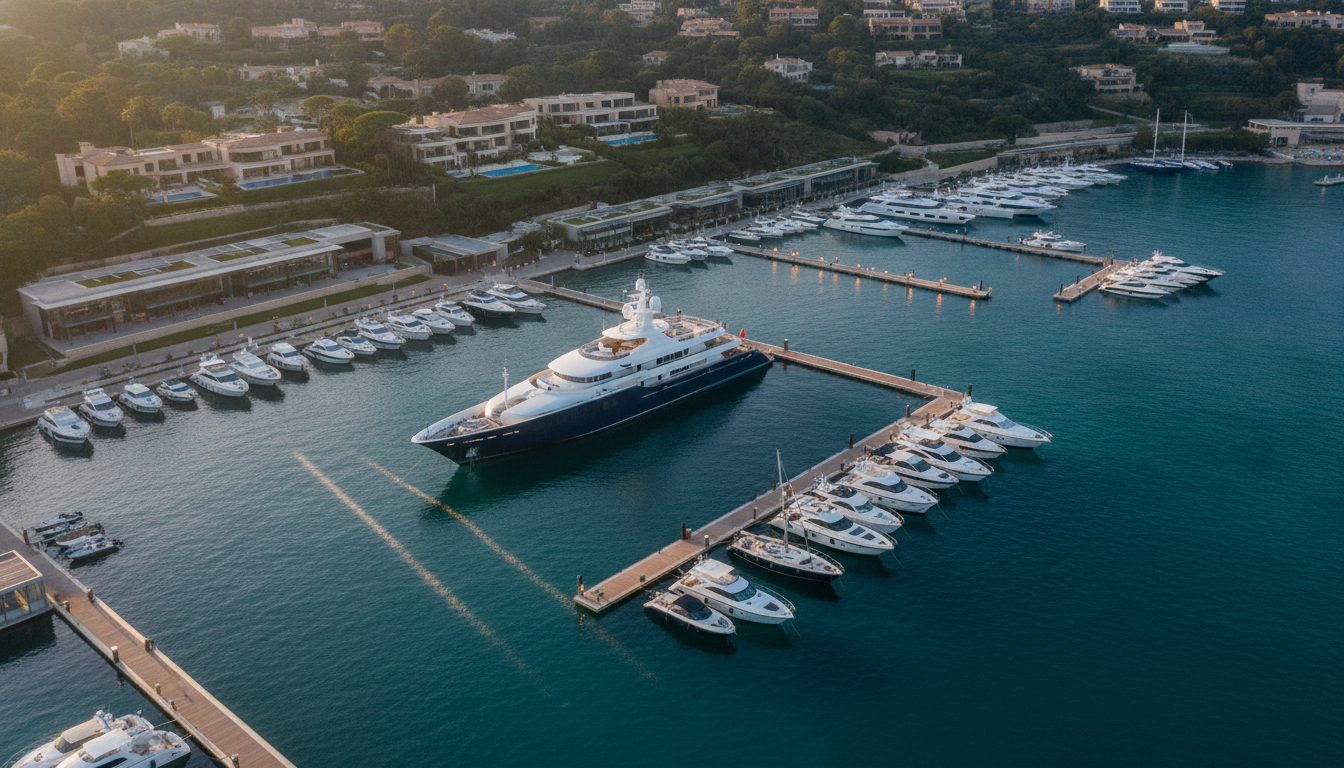
My home port is Marina Punat on Krk, Croatia. The annual berth for my 36-meter yacht costs me $53,000 there. By Mediterranean standards, that is moderate. In Porto Montenegro the same berth would cost $92,000, and in Port Hercules in Monaco it would be over $220,000 for the season.
In addition to the home port, there are visitor berth fees. When I tie up in the port of Portofino in summer, I pay $950 per night. In Saint-Tropez in the Vieux Port, it is even $1,300 per night during peak season in July and August. These costs add up: in 2023 I spent an additional $42,000 on visitor berths.
If you want to secure your berth in Croatia for the long term, you should take care of contracts early. The best marinas have waiting lists of several years.
Calculating Fuel and Operating Supplies Realistically
My two MTU engines of 1,800 hp each burn about 320 liters of diesel per hour at a cruising speed of 18 knots. At an average diesel price of $1.60 per liter in the Mediterranean in 2023, that works out to fuel costs of $510 per operating hour.
In 2023 I ran a total of 187 operating hours. That gives fuel costs of $95,400. On top of that come the generators, which also have to run in port for air conditioning, cooling systems and all the onboard electronics. For that I budget another $20,000 per year.
A practical tip: fuel costs are the only item you can influence directly through how you use the yacht. If you mostly leave the yacht in port, you save considerably here. But let's be honest: who buys a superyacht in order not to use it?
Hidden Annual Costs of Superyacht Ownership
Besides the big items, there are numerous smaller costs that add up. My 2023 breakdown includes:
- Flag registration and administration in Malta: $9,200 annually
- Safety equipment and certifications (ISPS Code, MLC compliance): $13,000
- Onboard communications and internet (satellite connection): $10,500
- Provisions and onboard supplies for crew and guests: $26,500
- Water and electricity supply in marinas: $7,500
- Accounting and yacht management fees: $20,000
For me, these hidden costs come to another $86,700. Many first-time buyers forget these items completely in their calculations. If you want to learn more about pitfalls like these, read my article on hidden cost traps when buying a yacht.
Factoring In Value Retention and Depreciation
A superyacht loses about 25 to 30 percent of its value in the first five years. For my yacht, that corresponds to annual depreciation of about $300,000 in the early years. I don't count this depreciation as operating costs in the narrow sense, but it is part of the overall picture.
To minimize depreciation, I deliberately invest in high-quality maintenance and strictly keep all service appointments. Complete documentation of all maintenance and upgrades is worth its weight in gold when you sell later. If you are interested in resale, you will find more capital-protection strategies in my post on depreciation of motorboats.
Superyacht Crew and Maintenance Cost Overview: My Complete Breakdown
Here is my complete cost breakdown for 2023 at a glance:
Crew salaries and payroll taxes: $323,000 (48 percent). Insurance: $57,000 (8.5 percent). Annual berth and visitor berths: $95,000 (14 percent). Maintenance and yard stay: $133,000 (20 percent). Fuel and operating supplies: $115,000 (17 percent). Other and hidden costs: $86,700 (13 percent).
Total for 2023: $673,000. That corresponds to 11.1 percent of the purchase price and $18,700 per meter of yacht length.
How Costs Behave for Other Yacht Sizes
According to 2023 data from Camper & Nicholsons International, costs per meter rise disproportionately as yacht size increases. A 50-meter yacht incurs roughly $24,000 to $31,000 per meter per year, and an 80-meter yacht even $38,500 to $49,500 per meter.
The reason: larger yachts need more crew, more complex technical systems and more expensive berths. Operating costs don't rise linearly with size but exponentially.
Can I Cover Costs Through Charter?
Many owners consider chartering out their yacht to reduce operating costs. In 2023 I chartered mine out for eight weeks and generated $264,000 in gross revenue. After deducting the agency's charter commission (20 percent), additional wear and increased maintenance costs, about $182,000 net remained.
That covers about 27 percent of my annual operating costs. Full cost coverage through charter is unrealistic for private use. Those who use their yacht commercially year-round achieve better utilization, but lose private availability and must meet higher regulatory requirements.
The decision to charter shouldn't be made on financial grounds alone. The additional wear and the organizational burden have to be weighed against the revenue.
How I Optimize My Superyacht Operating Costs
Despite the high costs, there is room for optimization. In recent years I have developed three strategies that help me keep costs in check without compromising on quality and safety.
First: I negotiated long-term contracts with my crew. A stable, satisfied crew is cheaper than frequent turnover with recruitment costs and onboarding time. Second: I schedule yard stays outside peak season. In March and October yard capacity is more readily available and prices are about 15 percent lower than in high summer. Third: I use a professional yacht management company that coordinates all contracts, insurance and maintenance. The $20,000 fee saves me more in optimized purchasing prices and prevents costly wrong decisions.
FAQ: Common Questions About Superyacht Operating Costs
What does a superyacht cost per year to maintain?
A superyacht costs an average of 10 to 12 percent of its purchase price per year to maintain. For a 40-meter yacht with a purchase price of $8.8 million, that means roughly $880,000 to $1.06 million in annual operating costs. The biggest items are crew salaries at 45 to 50 percent, maintenance and yard at 15 to 20 percent, and insurance, berth and fuel at 8 to 15 percent of total costs each.
How do I calculate superyacht operating costs per meter of length?
The rule of thumb: yacht length in meters multiplied by $16,500 to $22,000 gives the annual operating costs. A 30-meter yacht therefore costs $495,000 to $660,000 per year, a 50-meter yacht between $825,000 and $1.1 million. This calculation is more precise than the percentage method because it better reflects the disproportionately rising costs of larger yachts. Important: more luxurious fittings and more intensive use can push costs up by 20 to 30 percent.
What hidden costs are there in running a superyacht?
Often-overlooked costs include flag registration and certifications at $8,800 to $16,500 annually, satellite internet at $880 to $1,320 per month, safety equipment and inspections at $11,000 to $22,000, and provisions and onboard supplies at $2,200 to $4,400 per month. Accounting for international yacht structures also costs $16,500 to $27,500 per year. Together, these hidden costs make up about 10 to 15 percent of total operating costs and are frequently underestimated by first-time buyers.
Is chartering out my superyacht worth it to cover costs?
Chartering can cover 20 to 40 percent of operating costs, rarely more. With my 36-meter yacht, I earn about $33,000 in charter income per week in high season. After agency fees of 15 to 25 percent and increased maintenance costs, about $24,000 net remains per charter week. Eight weeks of charter a year yield about $192,000, which is roughly 30 percent of my total costs. Full cost coverage requires commercial year-round chartering, but that means losing private availability and facing higher regulatory requirements.
How do costs differ between a motor yacht and a sailing yacht?
Motor yachts incur 30 to 50 percent higher operating costs than sailing yachts of comparable size. The main difference is fuel: motor yachts consume 200 to 400 liters per hour at cruising speed, while sailing yachts use only 15 to 40 liters when motoring. Maintenance costs for two large diesel engines also considerably exceed those for a single auxiliary engine. On the other hand, sailing yachts need specialized crew for sails and rigging as well as regular sail surveys and mast inspections. All in all, a sailing yacht saves roughly $88,000 to $165,000 per year with otherwise comparable fittings.
My Conclusion: Superyacht Ownership Is an Investment in Quality of Life
$673,000 a year for my 36-meter superyacht is a lot of money. But it buys me something priceless: absolute freedom, privacy and the chance to explore the most beautiful places in the Mediterranean on my own schedule. When I'm anchored in a hidden cove off Sardinia in July, welcoming my business partners on the sun deck and going to dinner at the Da Achille restaurant in Baja Sardinia in the evening, I know what this investment stands for.
The operating costs of a superyacht are plannable and transparent if you calculate honestly. The 10 percent rule is a good starting point, but I always recommend planning a 15 percent reserve for unforeseen repairs and price increases. If you can't cover these costs from ongoing income, you should refrain from buying. A yacht should bring joy, not become a financial burden.
If you are thinking about entering the world of superyachts, then calculate honestly, plan conservatively and invest in a competent crew and first-class maintenance. These investments pay off many times over through value stability and safety. The rest is pure enjoyment.