Buying a Luxury Yacht: The Tax-Optimized Financing Structure

Reading time: 6 minutes
When I bought my first yacht over 24 meters, the purchase price was just under $4.1 million. Without a clean structure, the VAT alone would have been a six-figure amount that simply gets burned. Anyone who wants to buy a luxury yacht today can't avoid a well-thought-out financing and ownership structure; otherwise you pay extra where you could save.
In this article I show you the structure I use myself and that has been standard for years among business owners in my circle. It is not tax advice, but an honest look from practice.
Why you don't simply buy a luxury yacht privately
The biggest mistake I see among first-time buyers: they buy the yacht as a private individual, pay the full VAT in their home country and later wonder about running costs that are hardly tax-deductible. If you want to buy a luxury yacht, you should settle the ownership structure before signing, not after.
In Austria and Germany, VAT is 20 and 19 percent respectively. On a purchase price of $4.3 million, that is up to $860,000. This sum can be reduced considerably through the right structure, without moving into a gray area.
The company structure as a foundation
I bought my yacht through a company set up specifically for the purpose; no private individual appears in the owner register. This structure, often called a yacht purchase company, brings several advantages. The company buys, leases or charters the yacht, and operating costs can be booked as business expenses.
The choice of the company's country of domicile is important here. Malta, Cyprus and in part the Isle of Man offer established frameworks for exactly this purpose. You can find more in the article on flag registration and choosing the optimal country.
Malta yacht registry: the classic among owners
The Malta yacht registry is, for good reason, the first address for many yacht owners in Europe. Malta offers an EU-compliant leasing model in which VAT is reduced to a fraction, staggered by yacht size and length of use. For larger motor yachts over 24 meters, the effective tax rate can fall below 5 percent, depending on the specific design of the lease agreement.
The Maltese tax authority has refined this model over the years after the European Commission classified earlier leasing structures as unlawful state aid. Current details and the official position can be found directly at the Malta Tax and Customs Administration. Anyone who wants to buy a luxury yacht and is seriously considering Malta should look at this source before deciding.
Leasing instead of direct purchase
My own route ran through a leasing model with a buy-back option, and I have already written about it at length in the post on yacht leasing with a buy-back option. The company leases the yacht from a leasing company, pays monthly installments, and at the end of the term ownership passes at a residual value. VAT is calculated only on a reduced share that depends on use.
Yacht purchase price: how the structure affects total costs

The pure yacht purchase price is only half the calculation. What matters is the price after taxes, financing costs and ongoing operating costs over the holding period. For every purchase I calculate over at least ten years, not just at the time of purchase.
An example from my own calculation: with a purchase price of $4.3 million and an effective tax burden of 4 percent instead of 20 percent, you save $690,000 on the purchase alone. That sum flows into the ongoing operating costs, which I broke down in detail in the post on superyacht operating costs.
- Set up a company in a suitable EU country before the purchase contract is signed
- Have a leasing structure with a buy-back option reviewed instead of a direct purchase
- Bring in a tax advisor with specific yacht experience, not the generalist at your house bank
- Plan operating costs and charter income into the company from the start
Chartering as an additional building block
Many owners who buy their luxury yacht through a company also use the boat for chartering. That brings not only income but also strengthens the business use in the eyes of the tax authority. Whether this really pays off, I worked out in the article yacht as an investment.
Yacht VAT: know the legal limits
The European Commission has been watching tax models around yachts critically for years. In 2018, certain Cypriot and Maltese leasing structures were classified as unlawful state aid, after which both countries adjusted their rules. Anyone setting up a yacht VAT structure today should work exclusively with currently permissible, EU-recognized models.
Details on the legal classification and current requirements are provided by the Directorate-General for Taxation and Customs Union of the European Commission. I have my structure reviewed every two years by a specialized law firm partner in Malta; laws and administrative practice change faster than you think.
Why a foreign company is not a tax trick
Using the advantages of a yacht purchase through a foreign company has nothing to do with tax evasion. These are legal, EU-recognized structures that work just like leasing models for company cars. What matters is that the company has real economic substance and is not just a letterbox.
This is exactly where many first-time buyers fail. They set up a company but leave it in place without real business operations, without bookkeeping on site and without traceable use. That stands out immediately in an audit and can become expensive retroactively.
Practical process for buying a yacht through a company
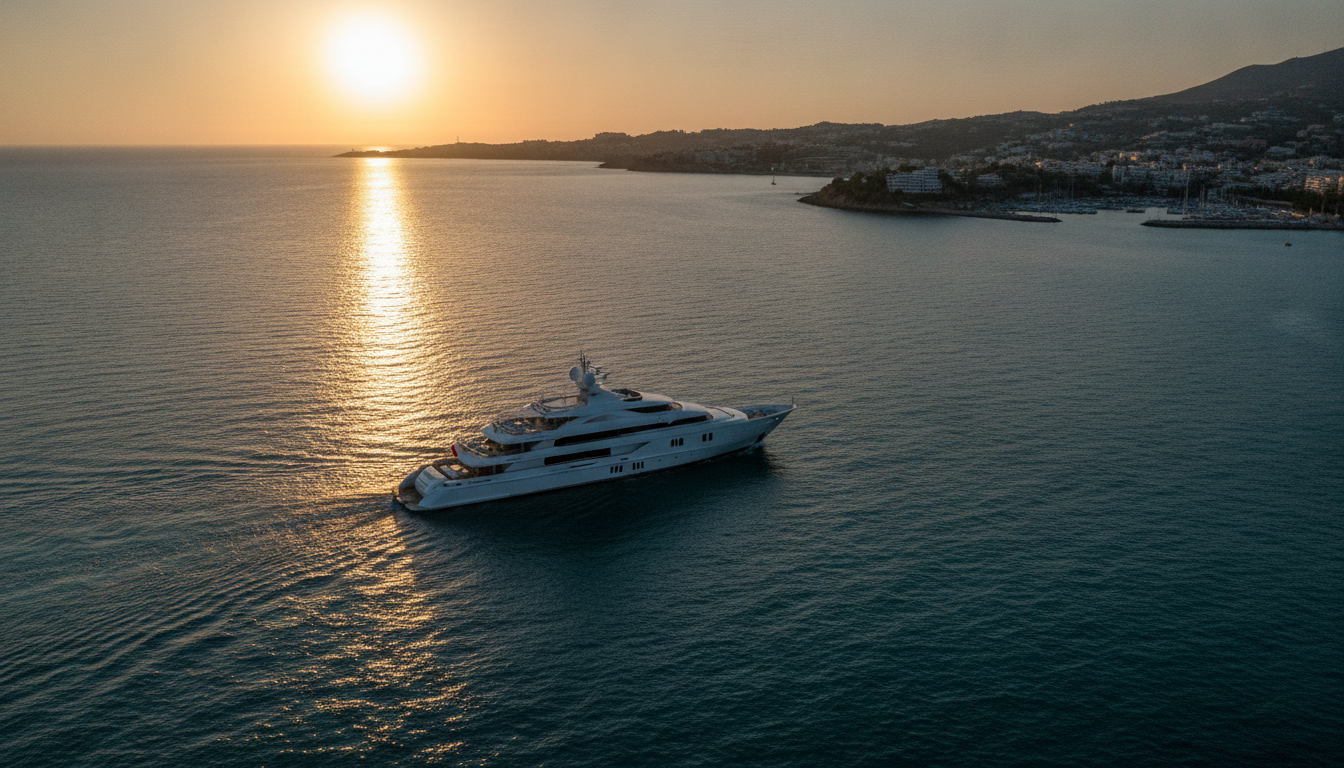
Before I buy a new yacht, I go through a fixed process. First comes the review of the purchase contract; I also collected the typical pitfalls in the post Boat purchase agreement: the clauses that truly protect you. Then follows coordination between the tax advisor, the local lawyer and the leasing company.
Only when the company structure, flag and financing are finalized do I sign the purchase contract. Sticking to this order has already saved me six-figure sums on two purchases, because errors in the structure can hardly be corrected afterwards.
Frequently asked questions about tax-optimized luxury yacht financing
Is it legal to buy a luxury yacht through a foreign company?
Yes, as long as the company has real economic substance and the structure complies with current EU requirements. Pure letterbox companies without substance are the risk, not the structure itself.
How much VAT do you save when buying a yacht through Malta?
Depending on the leasing model and yacht size, the effective tax burden can fall below 5 percent instead of the full 18 to 20 percent. The exact amount depends on the individual lease agreement.
Is the structure worthwhile for smaller yachts too?
From a purchase price of around $1.1 million, the structure usually starts to make economic sense. For smaller boats, setup and administration costs often outweigh the benefits.
Who should choose the tax advisor for such a structure?
Ideally an advisor with demonstrable experience in international yacht structures, not the generalist at your house bank. Specialized law firms in Malta or Cyprus know the current administrative practice best.
Conclusion: buying a luxury yacht with structure instead of gut feeling
Anyone who wants to buy a luxury yacht today should take the financing structure as seriously as the choice of shipyard or model. A well-thought-out company structure, combined with an EU-compliant leasing model, can reduce total costs over the holding period by a six-figure amount. Talk to a specialized advisor early, before you sign the purchase contract; that is the only point at which something can still really be shaped.