Yacht Charter From Split Marina: My Top Berths
Reading time: 11 minutes
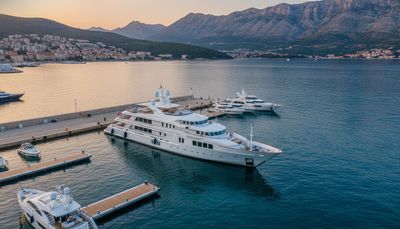
Three years ago I docked for the first time with a 52-foot Sunseeker in the ACI Marina Split and knew: this city would be my preferred starting point for every Adriatic charter. Not because of the well-known Diocletian's Palace backdrop, but because from here you can reach more distinct coastal characters within 48 hours than from any other Mediterranean yacht harbor I know. If you want to charter a yacht and take the Croatian islands seriously, you start in Split.
The marina landscape around Split has professionalized massively since 2020. According to the Croatian National Tourist Board, over 1,847 charter yachts were registered from the Split marinas alone in 2023, an increase of 23 percent over 2019. That also means: if you want a berth in the Adriatic at a top marina during peak season in July or August, you have to book by March at the latest.
Why Split Is the Superior Starting Point for a Yacht Charter
Split is ideally located geographically between the northern Kornati and the southern Elaphiti Islands. From here you reach Hvar in 2.5 hours, Vis in 3.5 hours and Brač in under an hour. Split-Kaštela international airport is 25 kilometers to the west, and the transfer time to ACI Marina Split averages 35 minutes. No comparison to Dubrovnik, where you have to allow at least 90 minutes from the airport to the marina.
Another advantage: the infrastructure in Split is stable year-round. Fuel stations, yards, spare parts services, even in October or May. I remember a situation in April 2022 when the cooling water pump on our charter yacht gave out. Within four hours, the yard at Marina Kastela had arranged a replacement part, something you won't experience at more remote yacht harbor locations.
The Three Best Marinas for Your Yacht Charter From Split
Not every marina in the Split region offers the same quality. I have tested all the larger facilities and have three clear favorites.
ACI Marina Split: The Classic With the Best Location
ACI Marina Split sits right on the edge of town, five minutes' walk from Diocletian's Palace. It offers 364 berths for yachts up to 60 meters in length, most of them with 16-amp shore power and a fresh water connection. The advantage: you are in the city right away, restaurants like Paradigma in the Varoš district are within walking distance, and the crew can go out in the evening without needing a taxi. The drawback: in high season there is considerably more activity here than at the outer marinas, and prices are around $200 per night for a 50-foot yacht.
Marina Kastela: More Peace, Professional Service
Marina Kastela is 15 kilometers west of Split, right by the airport. With 420 berths and a modern yard, it is my first choice when I'm planning a longer trip and need technical checks beforehand. The Mediterranean yacht harbor standard here is high: 24-hour security, fuel dock, concierge service. The marina works with several charter companies, so handover is often faster and more structured than in Split city. A berth costs about $165 per night here for a comparable yacht.
Marina Trogir (ACI): Historic Ambiance, Short Distances
Trogir is a UNESCO World Heritage Site and lies 30 kilometers northwest of Split. ACI Marina Trogir has 174 berths and a charm all its own: you are practically moored in the old town, can stroll through medieval alleys in the evening and eat in konobas like Konoba Trs, one of the best addresses for Dalmatian fish. For me, Trogir is the ideal starting point when I'm heading toward Šibenik and the Kornati. A berth in the Adriatic costs about the same here as in Split city, around $185 per night in season.
My Tried-and-Tested Routes From Split for 7 to 10 Days
You want to charter a yacht from Split, Croatia, but don't know where to go yet? I'll show you three routes that I have sailed myself several times and that offer different Adriatic experiences.
Route 1: The Classic – Brač, Hvar, Vis (7 Days)
Day 1: Split → Milna (Brač), 12 nautical miles. Milna is a quiet fishing village on the west coast of Brač, perfect for the first night. The harbor is sheltered, and the restaurant Navigare serves excellent peka.
Day 2: Milna → Hvar Town, 18 nautical miles. Hvar is glamorous, expensive and overrun in July, but the bay in front of the town, especially around the Pakleni Islands, offers crystal-clear water. I usually anchor in Vinogradišće bay on Sveti Klement, because fewer charter yachts lie there.
Day 3: Hvar → Vis Town, 22 nautical miles. Vis is rougher, more authentic and less touristy. The marina is right in town, and in the evening you sit in Konoba Vatrica over baked octopus.
Day 4: Vis → Komiža, 7 nautical miles. Komiža on the west coast of Vis is an old fishing village with a relaxed atmosphere. From here you can make day trips to the Blue Cave on Biševo.
Day 5: Komiža → Stari Grad (Hvar), 28 nautical miles. Stari Grad is the quieter counterpart to Hvar Town, with an ACI marina and less party tourism.
Day 6: Stari Grad → Bol (Brač), 14 nautical miles. Bol is known for Zlatni Rat beach. The marina is small but functional.
Day 7: Bol → Split, 18 nautical miles. Return to Split, possibly with one more stop in Lučice bay.
Route 2: The Explorer – Vis, Lastovo, Korčula (10 Days)
This route goes further south and is for more experienced crews. From Split you sail via Vis to Lastovo, one of the most remote inhabited islands in Croatia. The archipelago is a nature park, and you will find coves here that are empty even in August. From Lastovo, continue to Korčula, the birthplace of Marco Polo. ACI Marina Korčula is excellent, and the old town is among the loveliest the Adriatic has to offer. Return via Hvar and Brač to Split. This route adds up to about 180 nautical miles.
Route 3: The Northern Course – Šibenik, Kornati, Dugi Otok (10 Days)
Heading north from Split or Trogir. The goal is the Kornati, an archipelago of 89 islands. According to Kornati National Park, over 12,400 charter yachts were registered in the park in 2023, yet you can still find absolute solitude if you leave the main routes. I recommend Marina Tribunj near Šibenik as an intermediate stop: a small village, hardly any tourists, but a first-class yacht harbor. Then on to Dugi Otok, where you can anchor in Telašćica Nature Park. The steep coastline there is impressive, and the saltwater Lake Mir is a natural phenomenon. Return via Primošten and Trogir.
If you are considering acquiring a yacht yourself instead of chartering permanently, it is worth taking a look at my article Berth in Croatia: How to Secure Your Harbor Long-Term. Long-term rental of a berth in Split or Trogir is a decisive factor in the economics of owning a boat.
Practical Tips: What You Need to Know Before Chartering a Yacht

The formalities for a charter yacht from Split are manageable, but there are details many people overlook. You need a recreational sea boating license (for example the Austrian Küstenpatent or the German SBF See, or an equivalent such as the International Certificate of Competence), plus a VHF radio certificate. Many charter providers also require proof of at least 50 nautical miles of sailing experience or a skipper qualification.
Security deposits range from $2,750 to $5,500, depending on yacht size. I recommend hull insurance with a reduced deductible, which costs about $165 extra per week but saves nerves and money in the event of damage. Charter prices vary greatly: in the off-season (April, May, October) you pay about $3,100 per week for a 45-foot motor yacht, in July or August closer to $7,200.
Fuel is more expensive in Croatian marinas than ashore. Expect about $1.85 per liter of diesel (as of summer 2023). A 50-foot yacht consumes about 25 liters per hour at cruising speed, which adds up quickly. I always budget $660 to $880 in fuel costs per week, depending on the route.
Berthing fees in the ACI marinas are standardized and viewable online. For a 15-meter yacht, you pay about $175 to $220 per night in peak season, including electricity and water. In municipal harbors or coves where you only use a mooring buoy, it is often just $33 to $55.
Hidden Coves and Insider Tips Along the Adriatic Route
Everyone goes to Hvar, everyone anchors off Palmižana. I'll show you three coves that I discovered myself and that hardly anyone knows.
Stiniva Cove (Vis): A narrow rocky cove on the south coast of Vis, reachable only from the water. The entrance is so narrow that many skippers don't dare go in. I went through with a 45-foot yacht: spectacular, but only in calm seas and good visibility. The anchoring ground is sand and holds well.
Uvala Smrska Cove (Šolta): Šolta is often overlooked because the island lies between Brač and Split and has little infrastructure. The Smrska cove on the south coast is perfect for exactly that reason: no restaurant, no buoys, just nature. Ideal for a quiet night at anchor.
Sakarun Cove (Dugi Otok): White sand beach, turquoise water, a Caribbean feeling in the middle of the Adriatic. The cove lies on the northwest coast of Dugi Otok and is about 65 nautical miles from Split. There is a small beach bar but no marina. You anchor in the cove, and the anchoring ground is excellent.
When Is the Best Time to Charter a Yacht From Split?
Peak season in Croatia runs from June to September. I prefer May and September. In May the marinas are still empty, the restaurants not overcrowded, and prices are 40 percent below high season. The drawback: the water is still cool, about 18 to 20 degrees Celsius (64 to 68 °F). In September the sea is pleasantly warm at 23 to 25 degrees Celsius (73 to 77 °F), and the winds are steadier than in July, when there are often days of calm.
The maestral, a thermal northwesterly wind, blows from May to September, mostly in the afternoon at 10 to 15 knots. Perfect for relaxed sailing. The jugo, a southerly wind, brings rain and can become unpleasant, but is rare in summer. The bora, a cold northeasterly wind, occurs mainly in winter and spring and can become extremely strong: in February 2023, gusts of 98 knots were measured in Split.
If you are carrying the long-term idea of buying a yacht yourself, take a look at my post Motorboat Depreciation: How to Protect Your Capital. Choosing the right home port plays a central role.
Charter Providers in Split: What I Look For
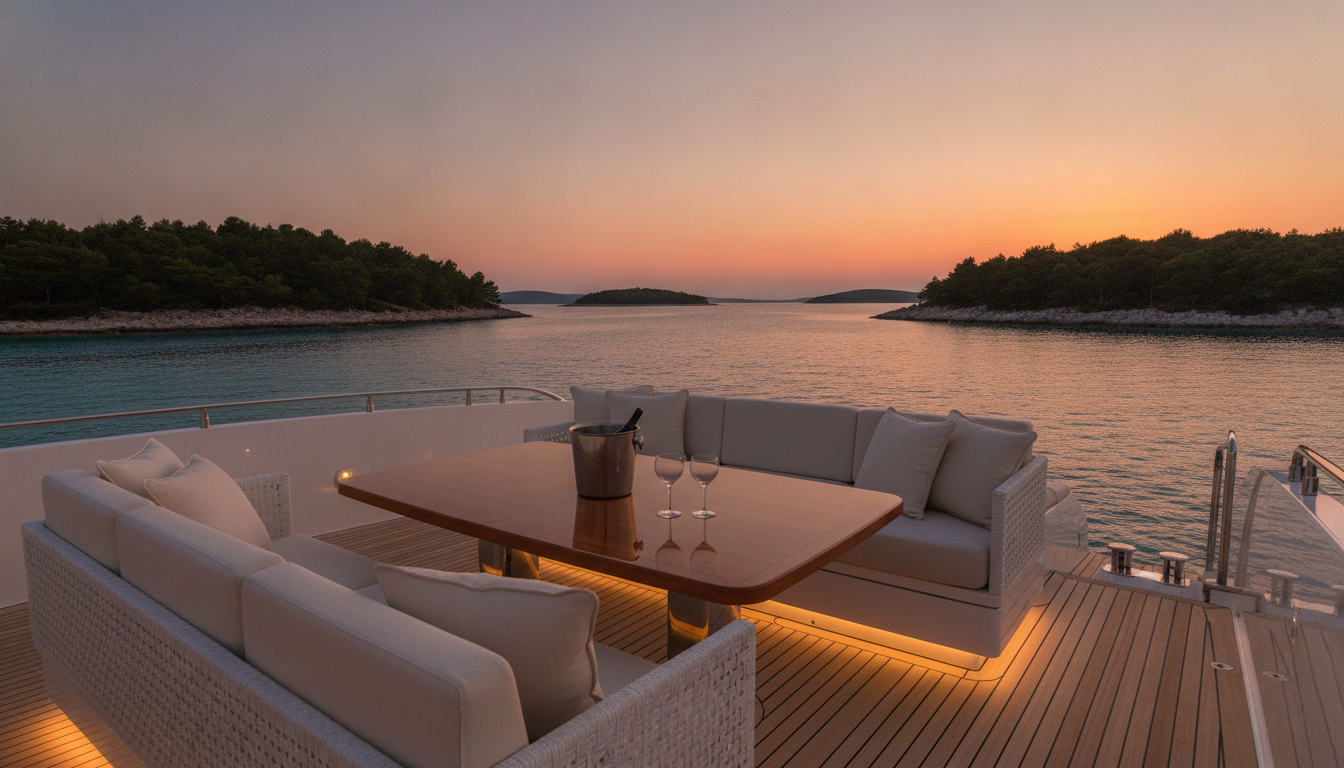
There are dozens of charter companies in Split. I have worked for years with two providers, both based in ACI Marina Split, and I know their fleets. What matters to me: age of the boats (no older than five years), maintenance history (can it be viewed?), scope of insurance and reachability in an emergency.
A good indicator is transparency at handover. If the charter company takes 90 minutes to explain every system on board and fills out a detailed handover protocol, that is a professional provider. If you are processed in 20 minutes and the skipper just quickly presses the keys into your hand, there will be stress at return.
Prices are similar at most providers, because the Croatian market is fiercely competitive. Differences are more likely in what is included: final cleaning, bed linen, towels, outboard for the dinghy, Wi-Fi on board. Some providers put everything in the package, others bill every little thing extra. I always budget about $550 in extra costs on top of the charter price.
Frequently Asked Questions About Chartering a Yacht From Split
How much does it cost to charter a yacht from Split for a week?
A 45-foot motor yacht costs from $3,100 per week in the off-season and about $7,200 in peak season. On top of that come extras such as final cleaning, fuel, berthing fees and provisions, another $1,300 to $1,650 in total.
Which marina in Split is best for charter beginners?
ACI Marina Split is ideal for beginners because it is centrally located, offers good infrastructure and has many charter providers on site who also offer briefings and skipper training.
Do I need a skipper, or can I steer a yacht from Split myself?
You can charter on your own if you have a recreational sea boating license and a VHF radio certificate. Many charter companies also require proof of sailing experience. If you're unsure, you can book a skipper for the first few days, which costs about $165 per day.
When is the best time for a yacht charter from Split?
May and September are ideal: fewer tourists, moderate prices, pleasant temperatures. July and August are expensive and crowded, but the weather is more stable.
Which route from Split is best for a week?
The classic Brač – Hvar – Vis route offers a good mix of culture, nature and swimming coves and can be done comfortably in seven days, even for less experienced crews.
My Conclusion: Why Split Is the Best Starting Point for Your Adriatic Charter
Split combines urban infrastructure with quick access to the most beautiful islands of the Adriatic. You have the choice between several professional marinas, a huge selection of charter yachts and routes that suit every taste, from relaxed island-hopping trips to demanding offshore cruises. The logistics are uncomplicated, the journey short, and even in peak season you will find quiet coves if you know where to look.
In recent years I have tried many Mediterranean yacht harbor locations from Monaco to Santorini, but when I book a charter yacht today, 80 percent of the time it is from Split. The combination of reliability, variety and this special Dalmatian way of life, with fresh fish in the evening and a glass of Pošip in a small konoba, makes the region unique. Once you have explored the Adriatic by yacht, you come back. Guaranteed.