Yacht Charter Contract Traps: The 7 Most Common Pitfalls

Reading time: 9 minutes
Three years ago I chartered a 72-foot motor yacht in the Mediterranean for the first time, and I walked into every contract trap imaginable. The deposit was withheld without explanation, cleaning fees suddenly appeared on the paperwork that had never been mentioned, and the insurance coverage turned out to be full of gaps. $9,200 in additional charges later, I knew that when you charter a yacht, it isn't the size of the boat that decides how the trip goes, but the quality of the charter contract. Since then I read every contract three times, and I've learned which clauses really matter.
In this article I'll show you the seven most common contract traps when you charter a yacht and how to protect yourself effectively as a charterer. You'll learn what to look for when reviewing a charter agreement, which hidden costs to watch out for, and how to set up professional protection for your yacht rental.
Trap 1: Unclear deposit terms and deductibles
The charter deposit is the most common point of dispute between charterer and owner. The standard is 15-25 percent of the charter price, so for a one-week charter at around $13,000 that's $1,950 to $3,250. The problem: many contracts don't clearly define when the deposit can be withheld in full or in part. I've seen even the smallest scratches in the gelcoat or missing fenders used as justification.
Make sure the following points are fixed in writing in the contract: the exact deposit amount, the method of payment (credit card, bank transfer, cash), the date of refund (no later than 14 days after the end of the charter) and a list of damages that are not covered by the deposit. These days I insist on photographic documentation of the yacht's condition at handover, which is created in the presence of the owner and signed digitally by both sides.
Another critical point is the deductible on insurance claims. Many yacht charter insurance packages include a deductible between $2,700 and $11,000. If you don't want to pay that amount, you can take out a separate deductible insurance policy (it costs roughly 8-12 percent of the deductible). Check whether this option is mentioned in the contract or whether you can add it later.
Trap 2: Hidden extra costs and unclear additional services
When I chartered a yacht out of Marina Split in 2022, the quote showed an attractive flat price of $10,700 for seven days. What wasn't mentioned: final cleaning $380, bed linen and towels $130, outboard motor for the tender $85 per day, transit log $50 and a mandatory briefing by the skipper for $215. In the end I paid almost $12,700, 18 percent more than I had budgeted.
According to a 2023 survey by the European Boating Association, additional costs for yacht charters in the Mediterranean average 12-22 percent of the base price. These costs are often buried in the fine print or only communicated at handover. Ask for a detailed cost breakdown before you review and sign the charter agreement. I use a checklist with the following items:
- Final cleaning (if not included in the price)
- Bed linen, towels, galley equipment
- Fuel for the main engine and the tender outboard
- Port fees at stopovers (some charter companies add a 20-30 percent markup here)
- Skipper or hostess (if desired)
- Water and electricity consumption in marinas
- Provisioning package (often overpriced, buying your own is cheaper)
If you're planning to charter a yacht out of Marina Split, also factor in the Croatian tourist tax (€1.30, about $1.40, per person per night). It isn't charged by the charter company, but you have to pay it to the harbor master at every port.
Trap 3: Inadequate insurance coverage
By default, chartered yachts carry liability insurance, but only for damage to third parties. Damage to the boat itself, to the equipment or caused by force majeure often isn't covered by the basic policy. I recommend clarifying the following insurance details in writing: the liability coverage limit (at least $3 million), hull insurance for the yacht (including the deductible), personal injury coverage for guests on board and protection in case of storms or severe weather.
A common problem is the so-called “gross negligence” clause. If the owner can prove that you acted negligently (for example by drinking at the helm or ignoring weather warnings), the insurer can refuse to pay. In that case you're personally liable for the entire damage. Make sure the contract defines exactly what counts as gross negligence. I've gotten into the habit of asking the harbor master for advice in writing (by email) whenever weather conditions are critical, so I have verifiable documentation that I acted responsibly.
Trap 4: Unclear cancellation terms
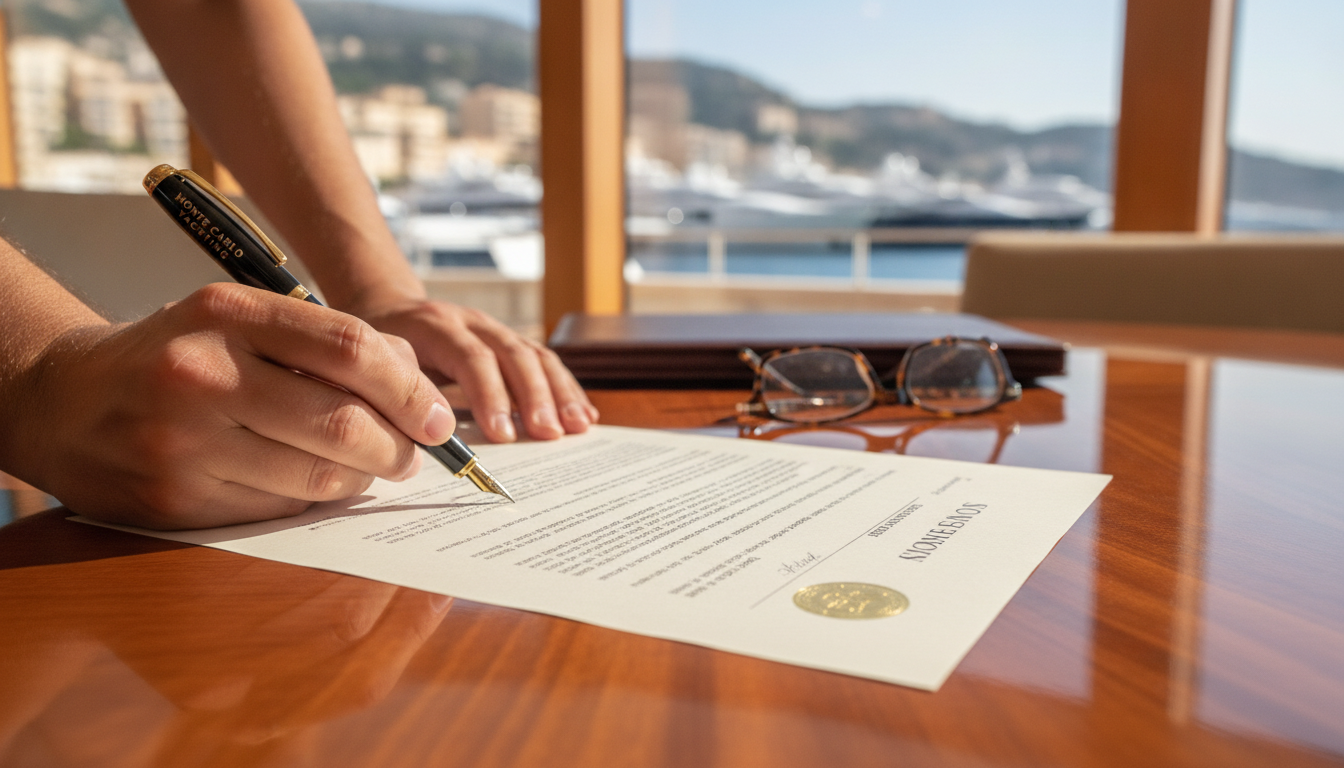
Cancellation clauses are often worded so that in the worst case you have to pay almost the entire charter price. Typical scales look like this: 30 percent up to 90 days before the start of the charter, 50 percent up to 60 days, 80 percent up to 30 days, and 100 percent after that. That means if you have to cancel two months before departure for health or business reasons, you lose half of your money.
An alternative is to take out charter cancellation insurance. It costs about 4-7 percent of the charter price and covers cancellations due to illness, accident, death of a close family member or unforeseeable professional obligations. Important: the insurance has to be purchased within 14 days of signing the contract, otherwise it doesn't apply. I now book this protection automatically, ever since I had to cancel a charter in Sardinia in 2021 because of a herniated disc and lost $7,000.
Also check whether the owner has the right to cancel the charter unilaterally, and what happens in that case. Reputable providers offer you either a full refund or an equivalent replacement yacht. If the contract says the owner may cancel without giving reasons and you only receive a credit toward a later charter, be careful.
Trap 5: Missing or imprecise description of the yacht's condition
On my first charter in Croatia I took over the yacht without a thorough inspection, a mistake that cost me dearly. At return, damage to the railing and the tender was suddenly claimed, damage I had never caused. Without photo evidence from handover I had no chance of defending myself. Since then I document every detail: hull, deck, sails (if any), electronics, anchor, lines and interior.
Insist that the owner gives you a written handover report listing all existing damage and defects. Supplement this report with your own photos and a video walkthrough that you save with a timestamp. If the owner doesn't offer a report, create one yourself and have a witness on site sign it (for example a crew member or a friend). Just as with a boat purchase agreement, the same applies to the charter contract: documentation is your strongest weapon.
Trap 6: Inadequate provisions on crew and qualifications
Many charterers underestimate the legal requirements for the skipper. In most European waters you need at least a recreational boating license for sea (in Germany, for example, the Sportbootführerschein See) and a radio certificate (SRC or LRC). Some charter companies additionally require proof of practical experience, such as a logbook with at least 500 nautical miles or a “skipper résumé”. If you can't provide this proof, you have to hire a professional skipper, which costs $165-$275 per day.
Clarify in advance which qualifications the charter company specifically requires and whether they are documented in the contract. I once had a charter company demand additional proof shortly before the start of the charter that wasn't mentioned in the original contract. That caused a two-day delay and unnecessary costs. Have all requirements confirmed in writing and check whether they match the legal requirements of the charter country.
Trap 7: Vague wording on cruising area and usage restrictions
Charter contracts often contain clauses that restrict your cruising area. Typical wording includes: “Charter only in Croatian territorial waters”, “Night sailing only with the owner's approval” or “Mooring in unapproved marinas prohibited”. The problem: these restrictions are often vaguely worded or contradict each other. I've seen contracts that said “No anchoring without permission” but never defined how and when that permission should be obtained.
Ask for a clear list of permitted and prohibited cruising areas. If you plan a trip along the Dalmatian coast, for example, and also want to enter Italian waters, that has to be in the contract. Some charter companies require a separate permit for cross-border trips or raise the insurance premium. Clarify these details in advance, otherwise you risk your insurance refusing to pay in the event of a claim because you left the approved cruising area.
How to protect yourself legally when you charter a yacht
After losing several thousand dollars through avoidable mistakes, I now follow a standardized process that gives me peace of mind. First, I request the complete charter contract at least four weeks before the charter starts and have it reviewed by a maritime lawyer. That costs about $330-$550, but it has already saved me from far more expensive mistakes.
Second, I create a checklist with all the relevant points: deposit amount and refund terms, a detailed cost breakdown including all additional costs, insurance coverage and deductible, cancellation terms and right of withdrawal, condition report and handover procedure, qualification proof for the skipper and crew, cruising area and usage restrictions. I go through this checklist point by point with the owner and have every answer confirmed in writing.
Third, I always take out both charter cancellation insurance and deductible insurance. The total cost is about 10-15 percent of the charter price, but I sleep much better. Since I started using this strategy, I haven't had a single unpleasant surprise.
Frequently asked questions (FAQ)
What should I look at first in a yacht charter contract?
Check the deposit terms and the cancellation terms first. These two points are the most common sources of disputes and can quickly cost you several thousand dollars. Have all costs listed in writing and clarify which insurance policies are included in the price.
How high should the charter deposit be?
The usual range is 15-25 percent of the charter price. For a one-week charter at $11,000, that's $1,650 to $2,750. If the owner asks for significantly more, ask why and have the deposit refund guaranteed in writing.
What insurance do I need when I charter a yacht?
At minimum, liability insurance (usually included in the charter price) and hull insurance for the yacht. Charter cancellation insurance and deductible insurance are also recommended if you don't want to cover the high deductible yourself.
What happens if I damage the yacht?
Minor damage is usually deducted from the deposit. For larger damage the hull insurance applies, but you have to pay the deductible (usually $2,700-$11,000). Document every instance of damage immediately and inform the owner in writing so you don't lose any claims.
Can I cancel a charter contract at short notice?
Yes, but it's usually expensive. Typical scales: 30 percent up to 90 days before the charter, 50 percent up to 60 days, 80 percent up to 30 days, and 100 percent after that. With charter cancellation insurance you can cover these costs if you have to cancel for a recognized reason.
Conclusion: chartering a yacht only works with a watertight contract
I've learned from my own mistakes and have since developed a system that protects me from the most common contract traps when chartering a yacht. The most important takeaway: a low charter price is worth nothing if you end up paying extra through hidden costs, unclear deposit terms or missing insurance. Invest time in reviewing the charter contract and a few hundred dollars in professional advice rather than facing nasty surprises later.
If you're also interested in buying your own yacht and want to know which legal pitfalls lurk there, I recommend my article on hidden cost traps when buying a yacht. There you'll learn how to stay on the safe side with the purchase contract too. My experience shows: whether charter or purchase, care in drafting the contract is the key to relaxed days on the water.